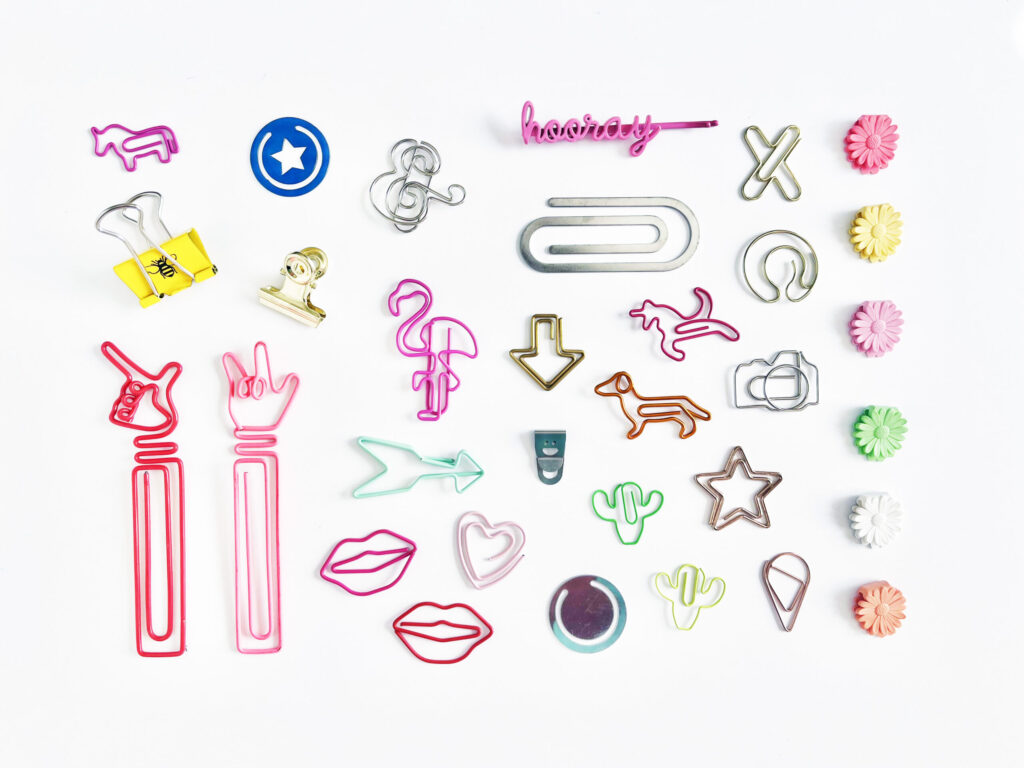
You’ve seen my collection of security envelope patterns, and my found cards collection. Now, behold my collection of novelty paperclips. Look how cute!!!
The dachshund, the flamingo, and the teeny tiny clip with the adorable little smiling face (the one both arrows are pointing toward) are my favorites.
I’m sorry to say I don’t have sources to link. Many of them came in kits from a line of scrapbooking products that no longer exists (RIP), and the others have been in my collection for so long that I don’t remember where they came from. I’m sorry, too, for the photo quality. We’ve officially entered the season of unpredictable lighting, and I no longer have a proper lighting setup. iPhone photos and some adjusting of brightness, contrast, saturation, and/or shadows will have to do for the next several months.
Not pictured: A giant hand-shaped paperclip that I forgot to photograph because I actively use it to hold open my small weekly calendar and therefore it’s not stored with the rest of the collection. Oops! It looks exactly like this one (I bought mine a few years ago from a local store I love (Cargo) and have no clue how much I paid for it). (This is the only paperclip in the collection that I actively use. The others sit in a cute dish on my desk for my viewing pleasure.)
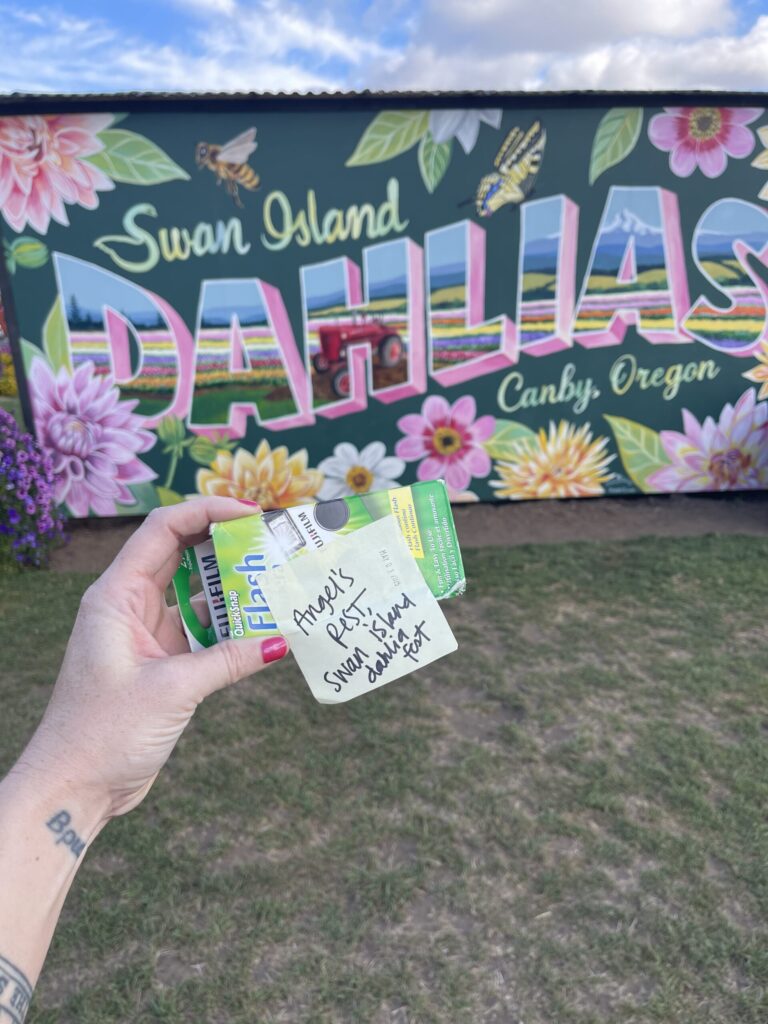
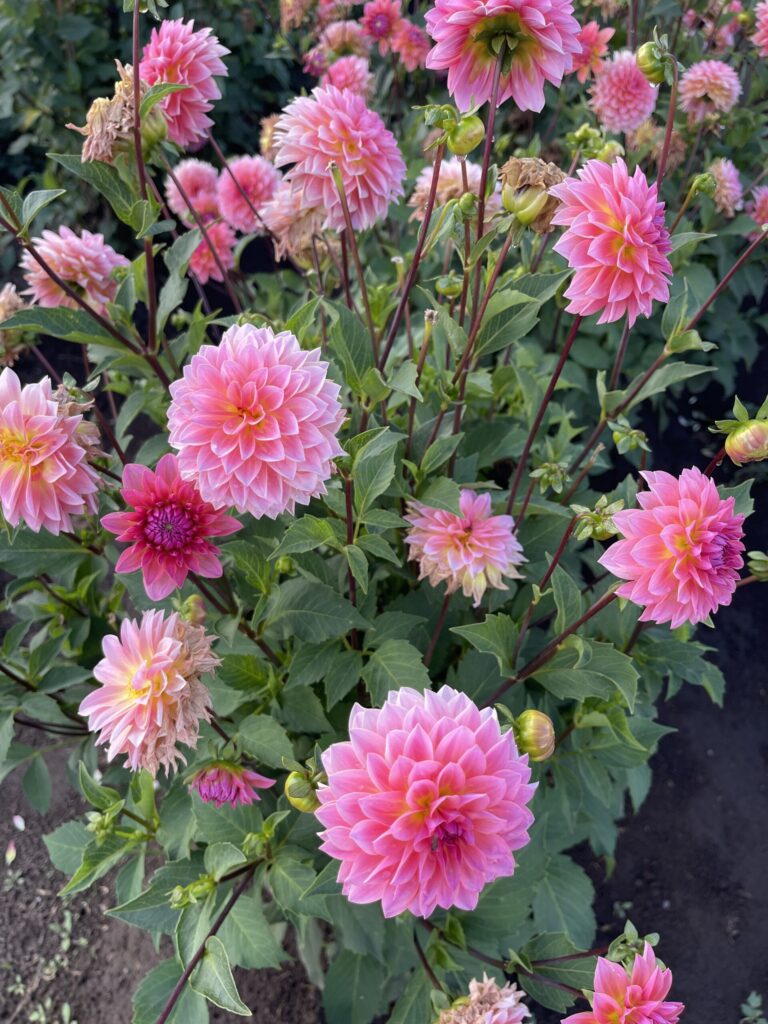
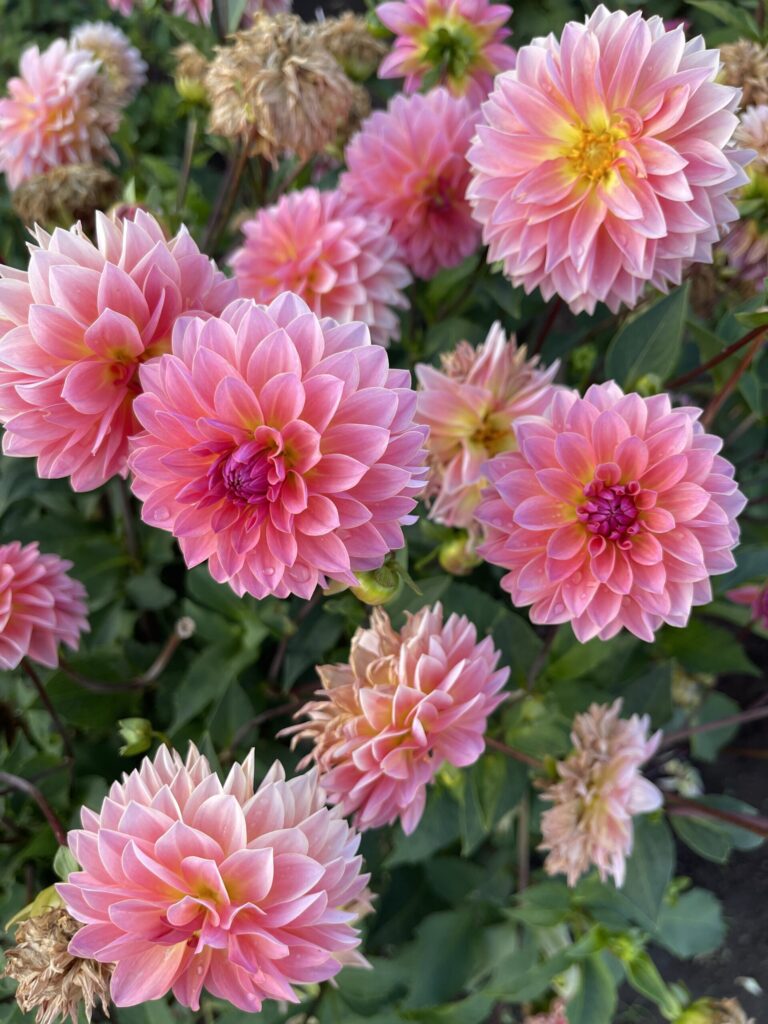
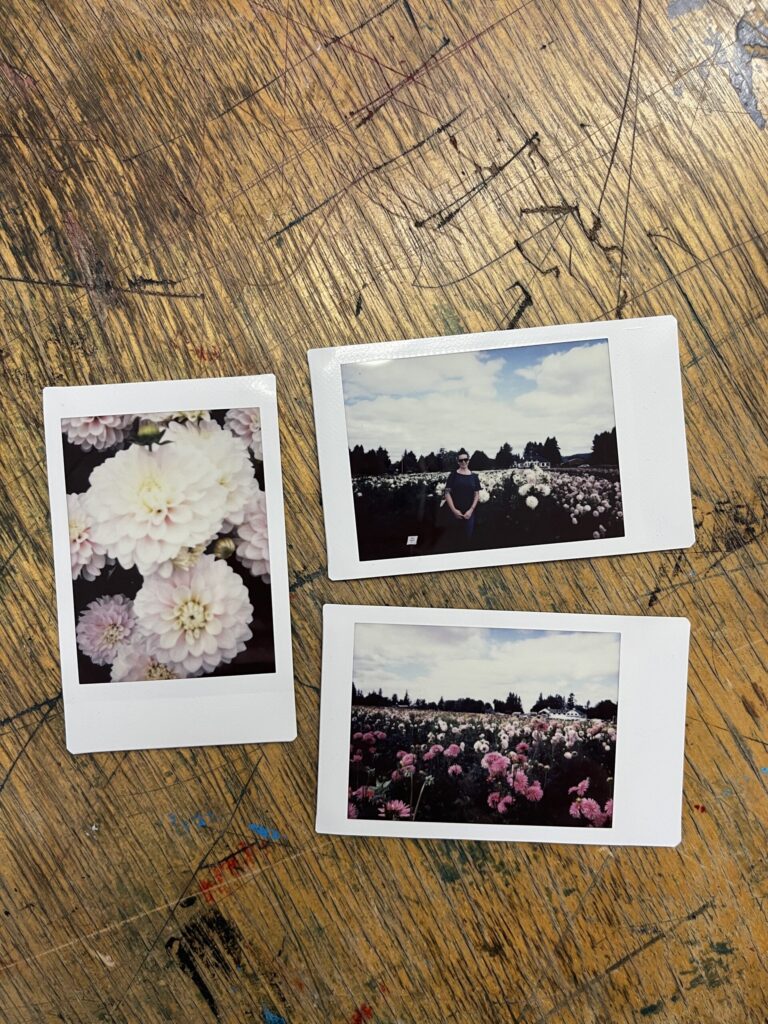
A few days ago I received the scans, negatives, and prints from a disposable camera I dropped off a few weeks ago. The camera was nearly a decade old—it had a “process by” date of June 2019 printed on its packaging—and I wasn’t sure how the photos would turn out, or if they would at all. I’m pleased to report that my $40 was not for naught: 19 and a half of the 27 exposures, which span five hikes from last summer and my first visit to the dahlia festival this summer, came out fine enough. Photos from three of those hikes and from the dahlia festival are below. You can see similarly composed iPhone photos from each occasion in its linked post.
I love how these photos turned out, the softness and grittiness and nostalgia of them. Digital cameras could never!! I have two more of these nearly decade old disposable cameras in my desk drawer and while I’m not thrilled to fork over $40 PER CAMERA for them to be developed, I am pretty stoked to take photos with them. If it didn’t cost so much to have film developed, or if I had more, uh, disposable income, I would love to (1) take way more photos using disposable cameras, à la a fellow Portlander and his incredible project (extremely my shit), and (2) re-learn to properly shoot film using a proper film camera.
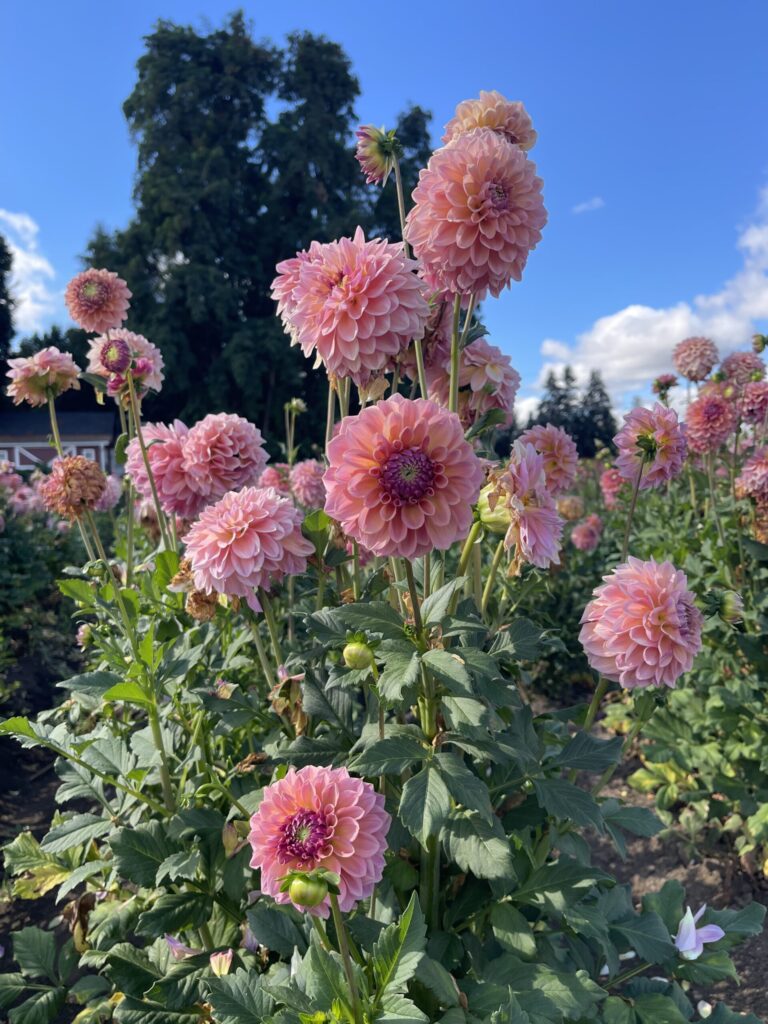
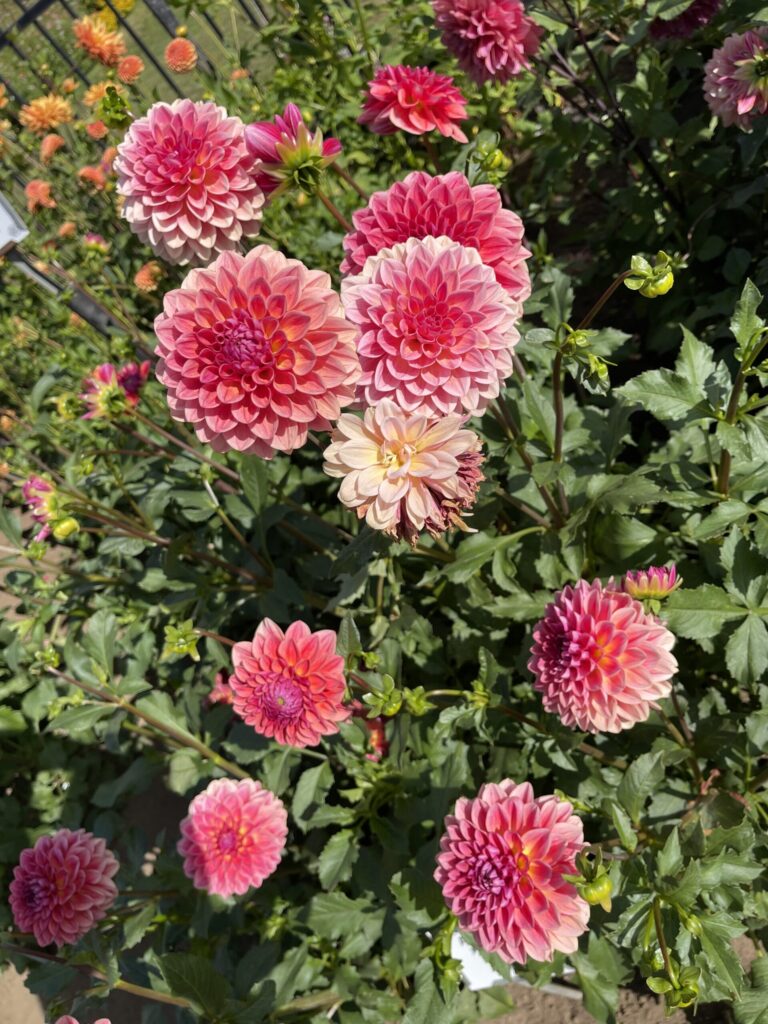
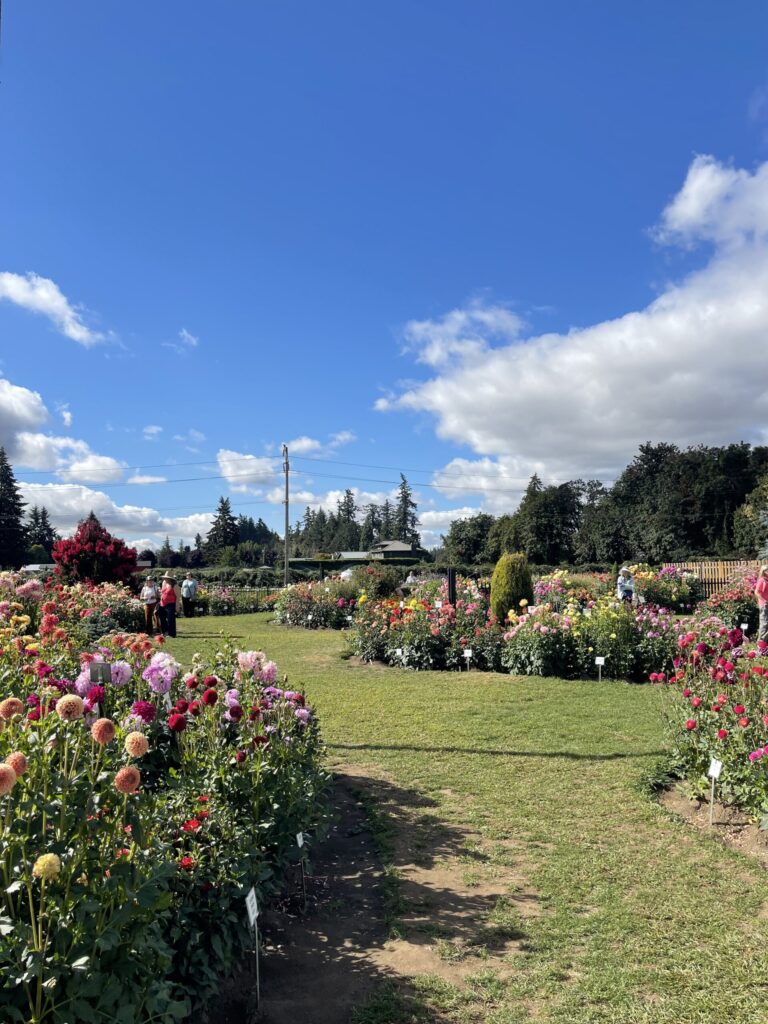
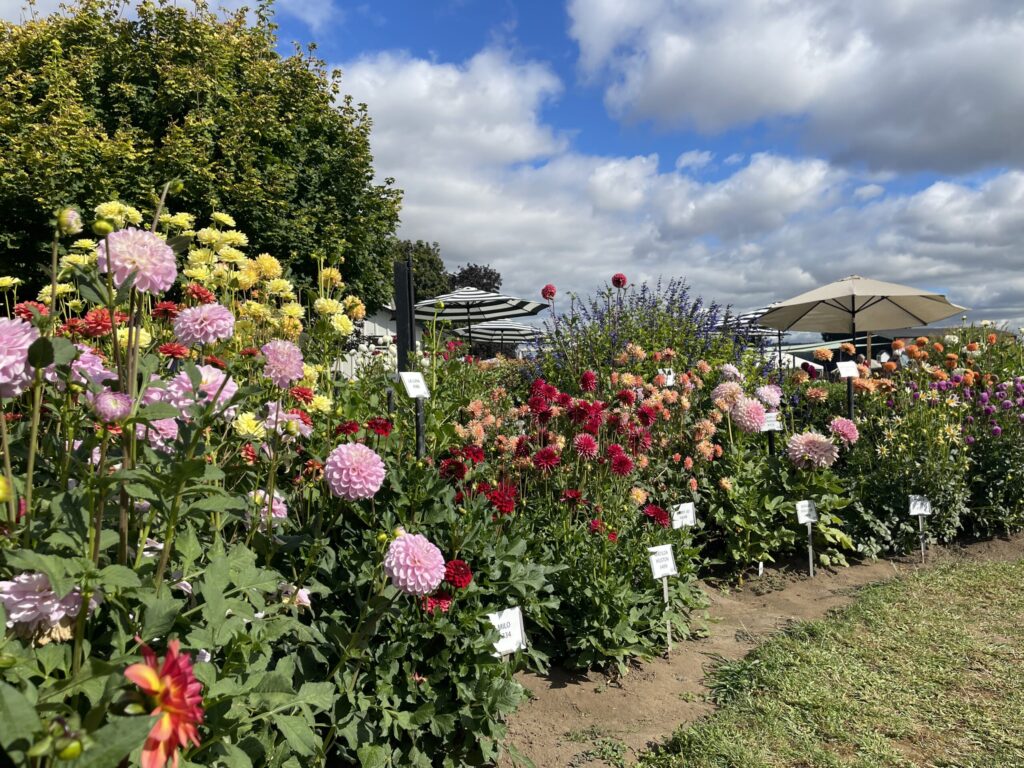
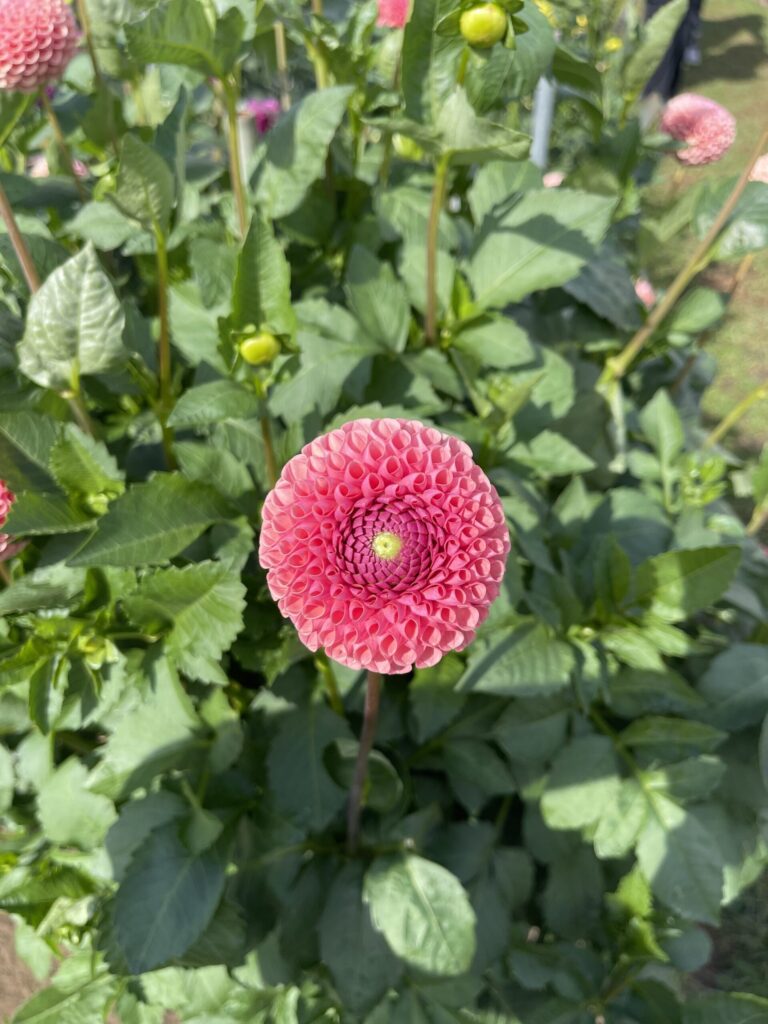
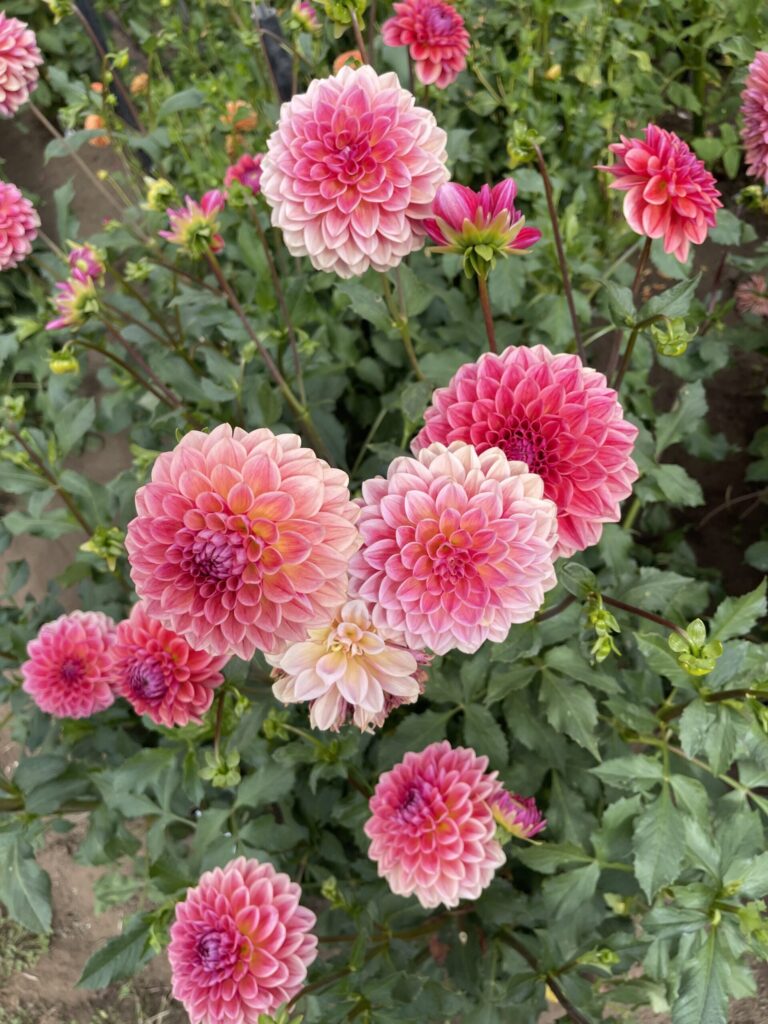
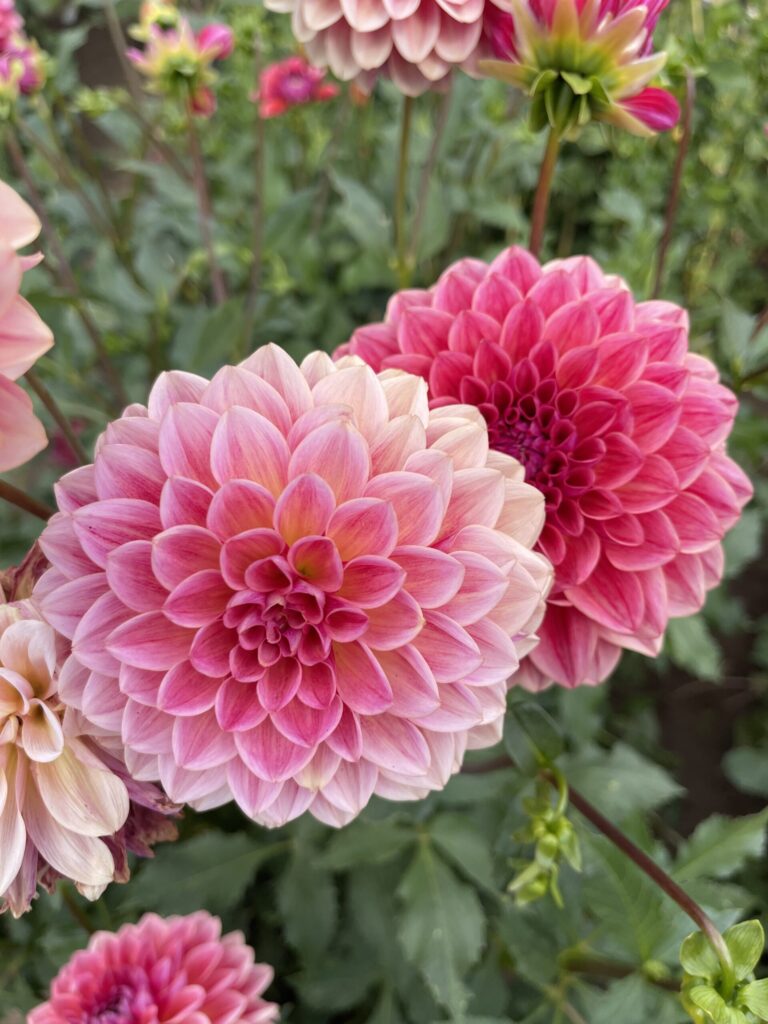
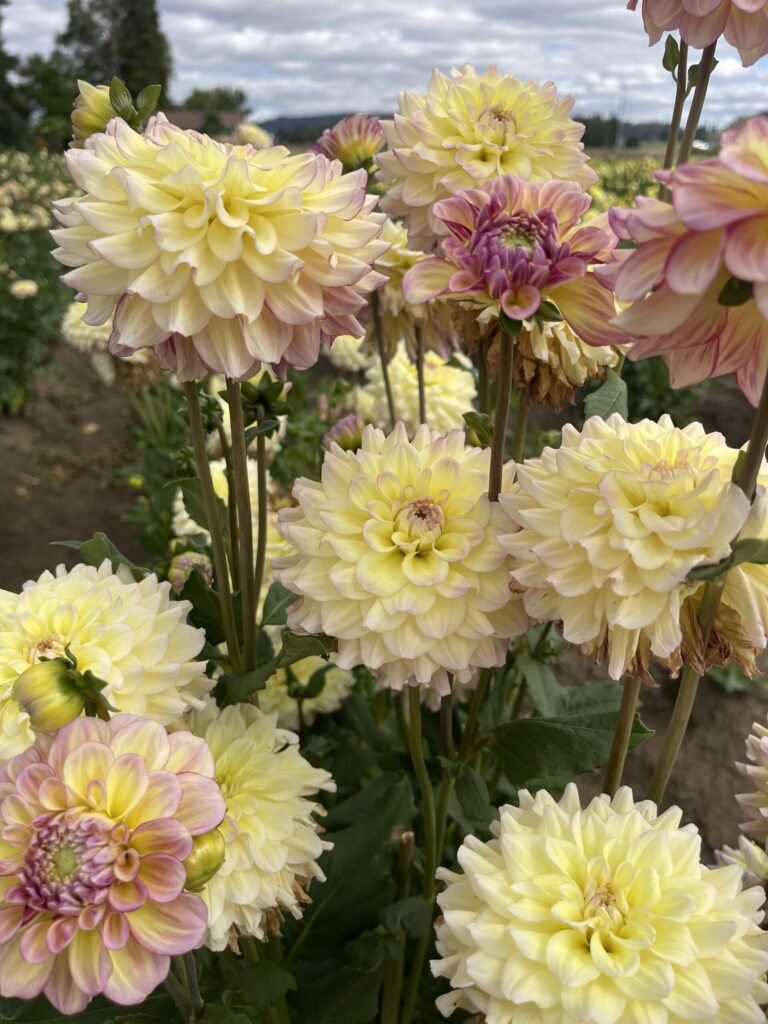
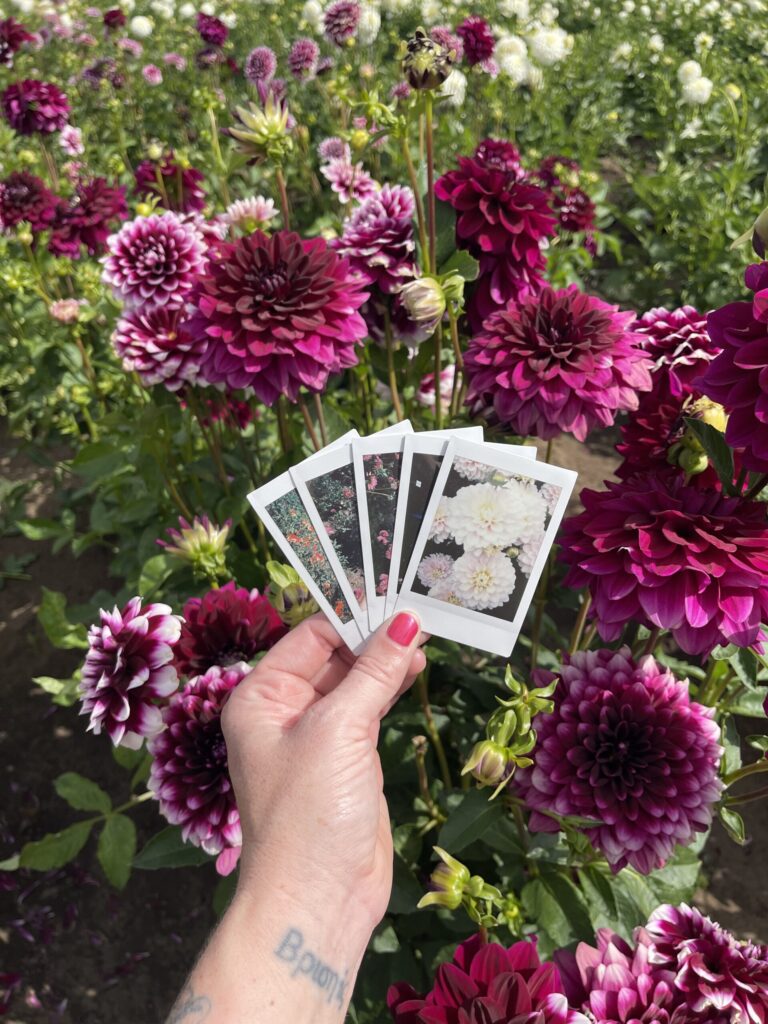
This enormous photo dump of a post is brought to you by my visit to the 2026 Swan Island Dahlia Festival on Michael Jackson’s Birthday Eve (Friday), a field trip I’ve been meaning to take for the last four summers. I went early (right when they opened), stayed for two and a half hours, and could’ve stayed longer had I not had to leave to make it to an appointment. I will absolutely be back.
Along with my phone, I brought my Instax and a disposable camera. I’d planned to bring the disposable with me to the festival last summer, as evidenced by that May 2025 date stamp on the Post It note stuck to the packaging. I didn’t because I didn’t go. And of course, even though I remembered to bring it with me on Friday, I didn’t take very many photos with it. Oh well. I’m excited to see how the few I took turn out, once I use up the few remaining exposures and have the roll developed.
I thought about bringing my “real” camera (an old Canon Rebel I bought at Target about 12 years ago). Because I was already carrying the Instax and the disposable and my phone and a water bottle and a bunch of other shit in my small tote bag, I didn’t. I wish now that I had. Almost all of the photos I took on Friday, I took using my phone. They turned out fine enough. I think my DSLR—or even a pocket-sized, point-and-shoot digital camera— and I could do better.
The two best things about the festival: it’s free to attend (and to park!), and I saw Michael there twice.
All of the photos in the post are straight out of my iPhone. No editing, no cropping, no resizing, etc. I say this to reiterate my belief that you don’t need a “real” camera to document your life and the things that are important to you. Is a DSLR nice to have? Yes. Is it necessary for the average, everyday person, or for memorykeeping? No.
Earlier this summer, something in the street caught my eye while I was walking to the library and when I went over to check it out I was so charmed by what I saw.
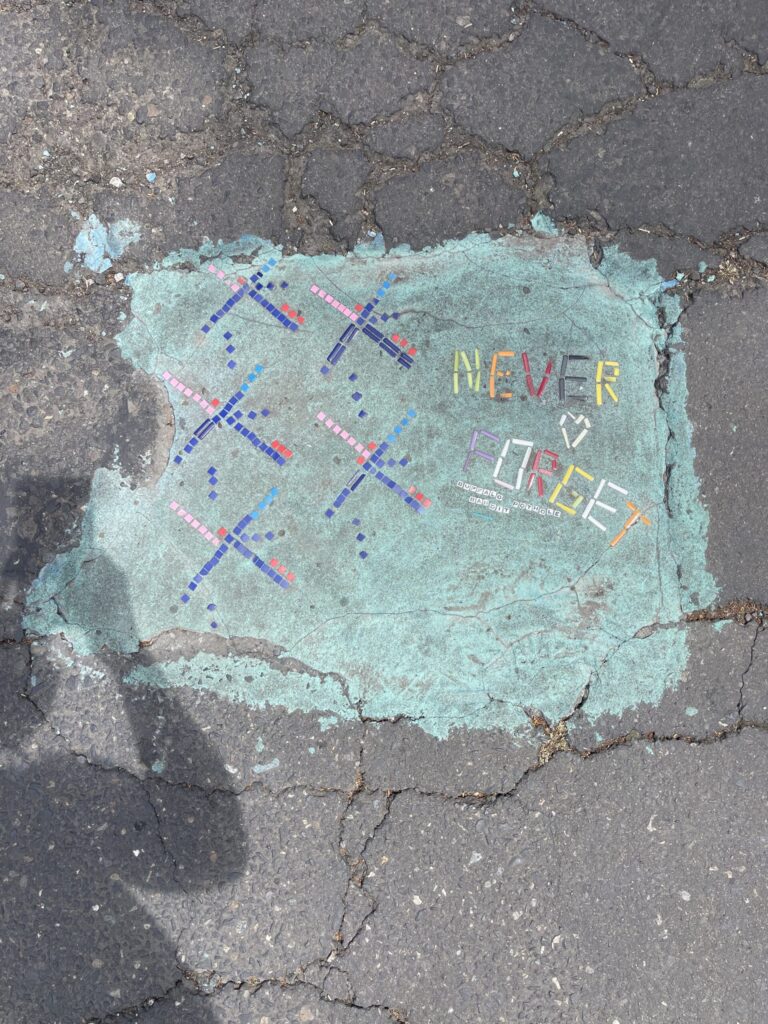
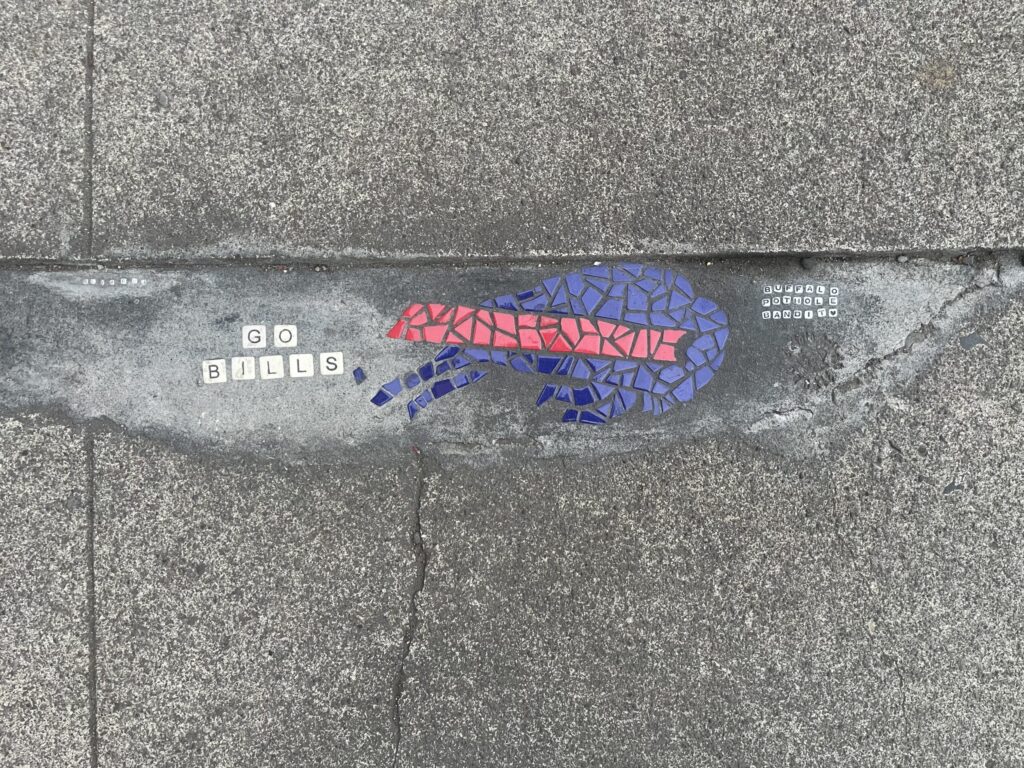
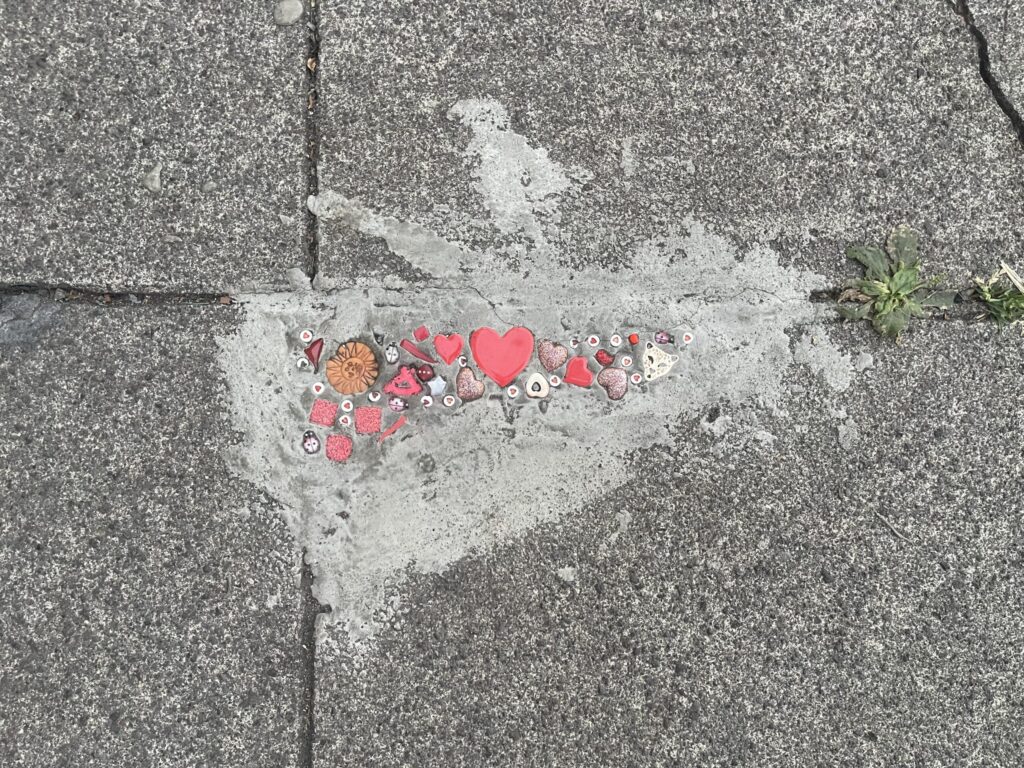
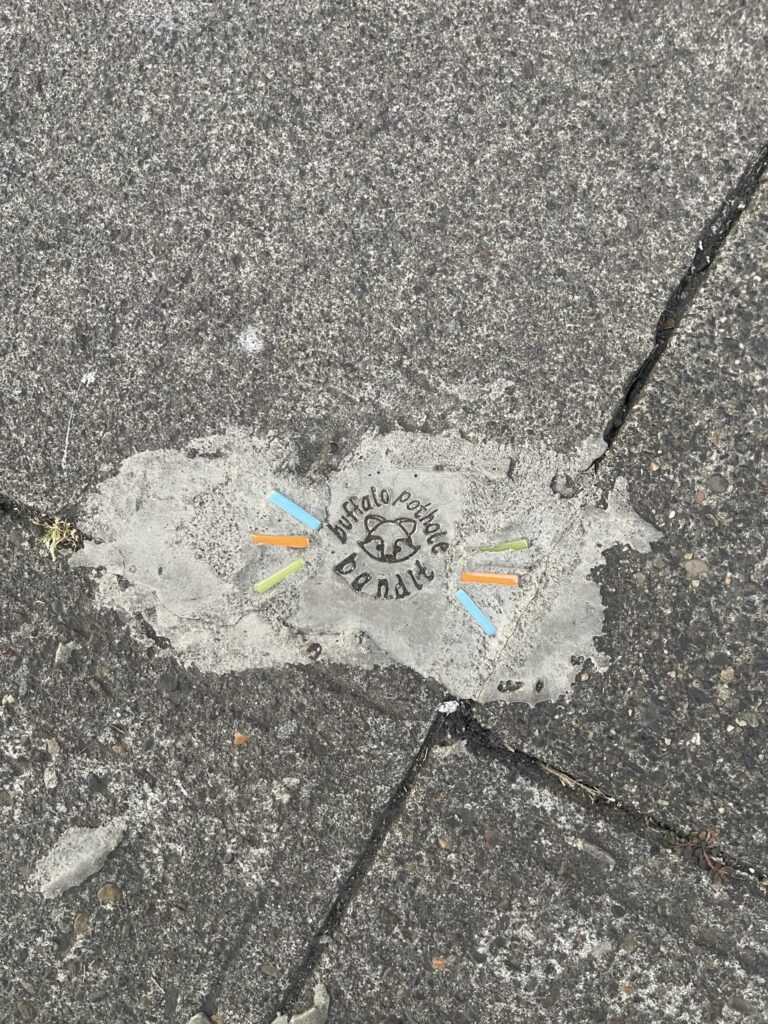
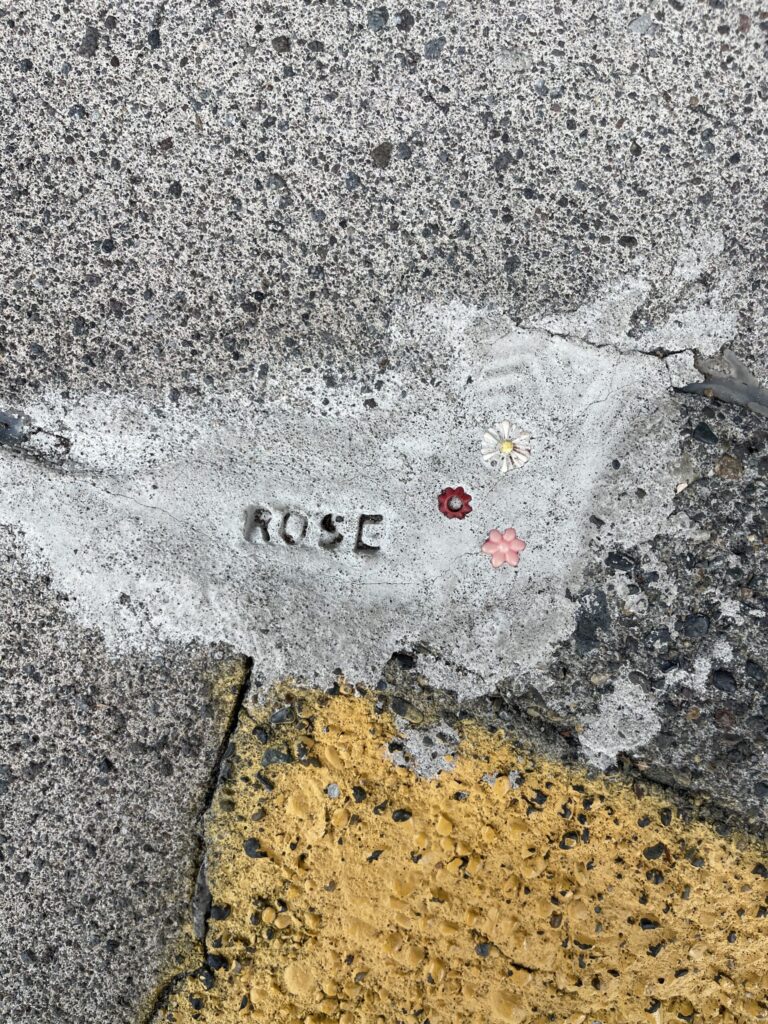
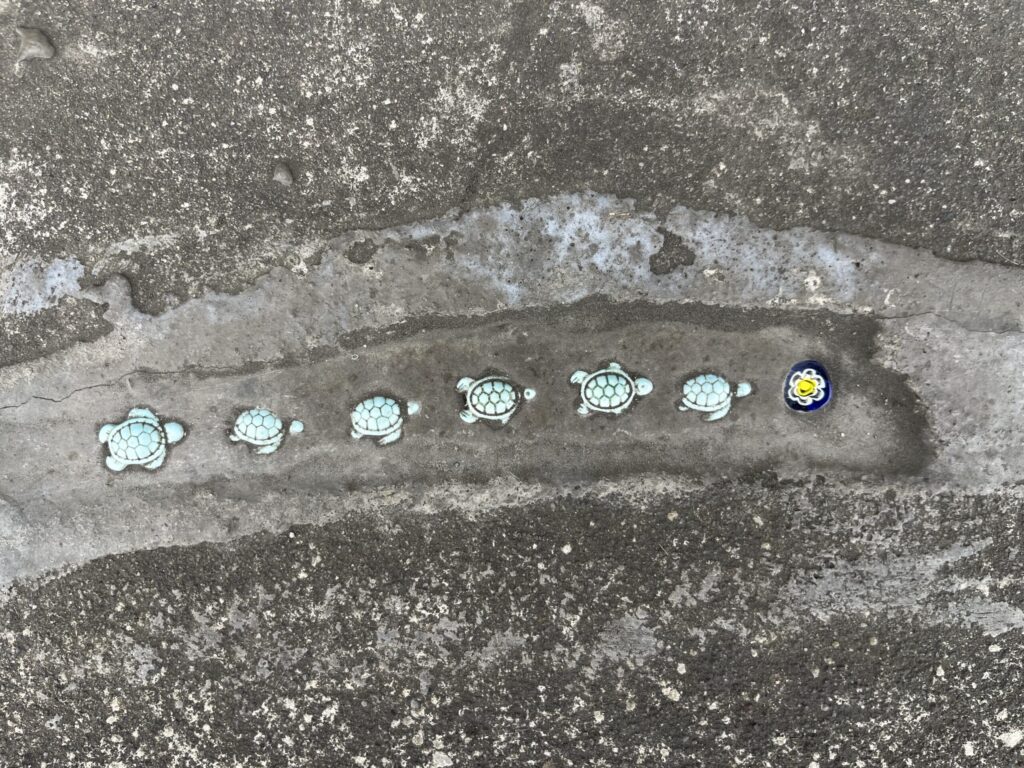
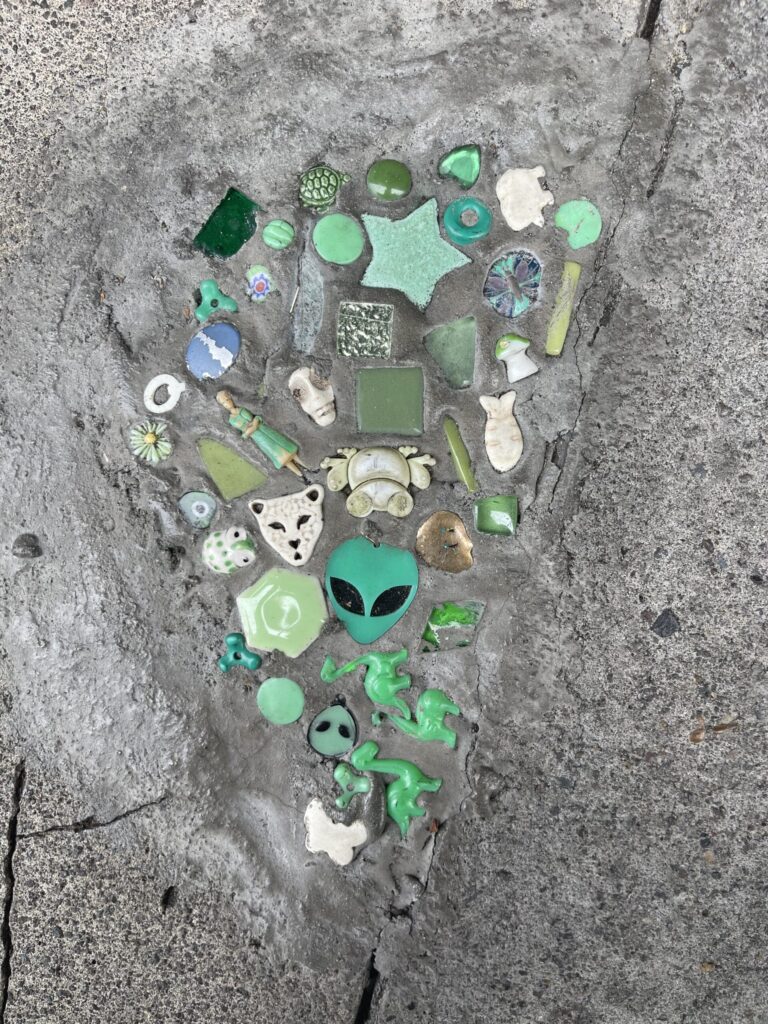
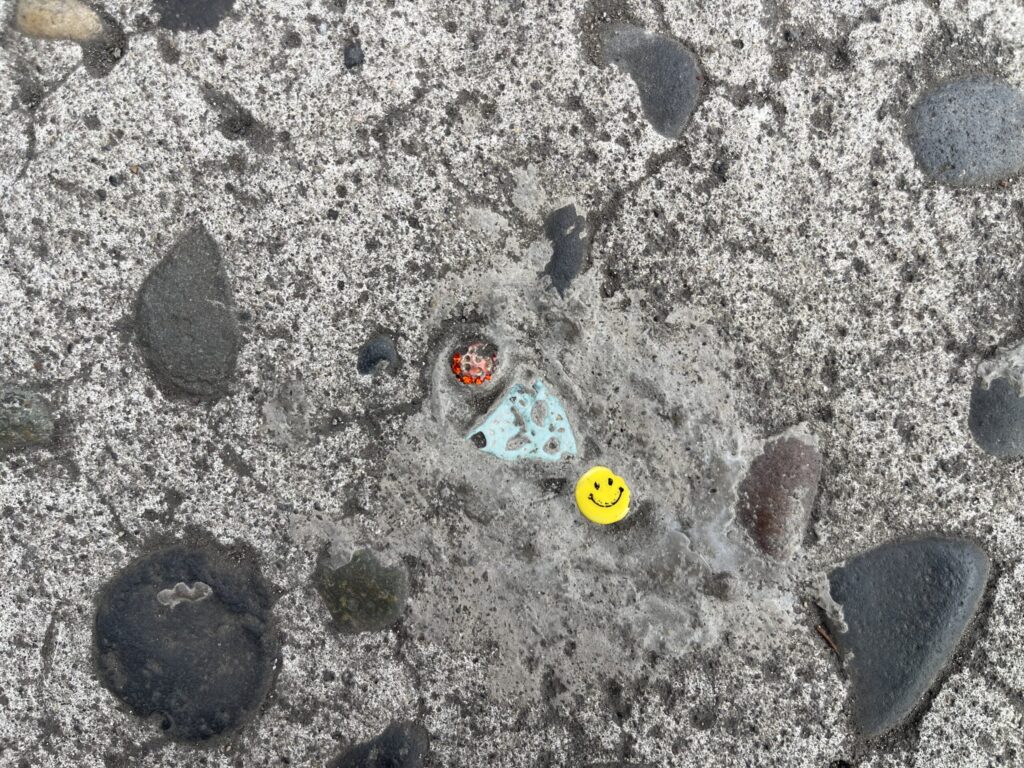
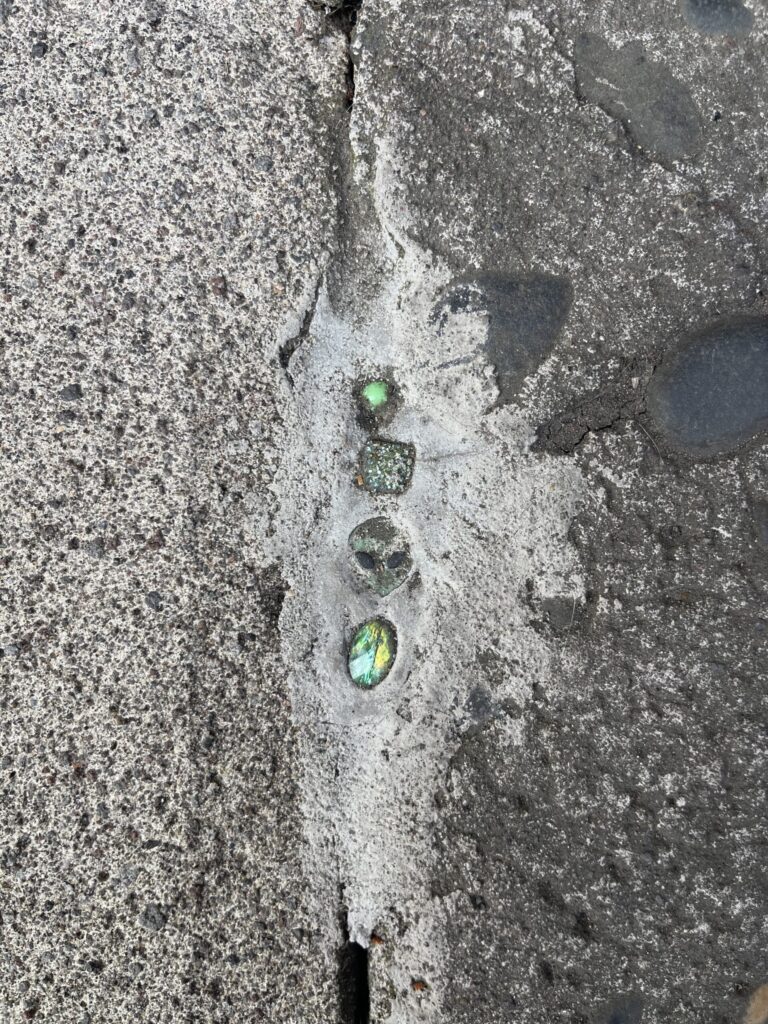
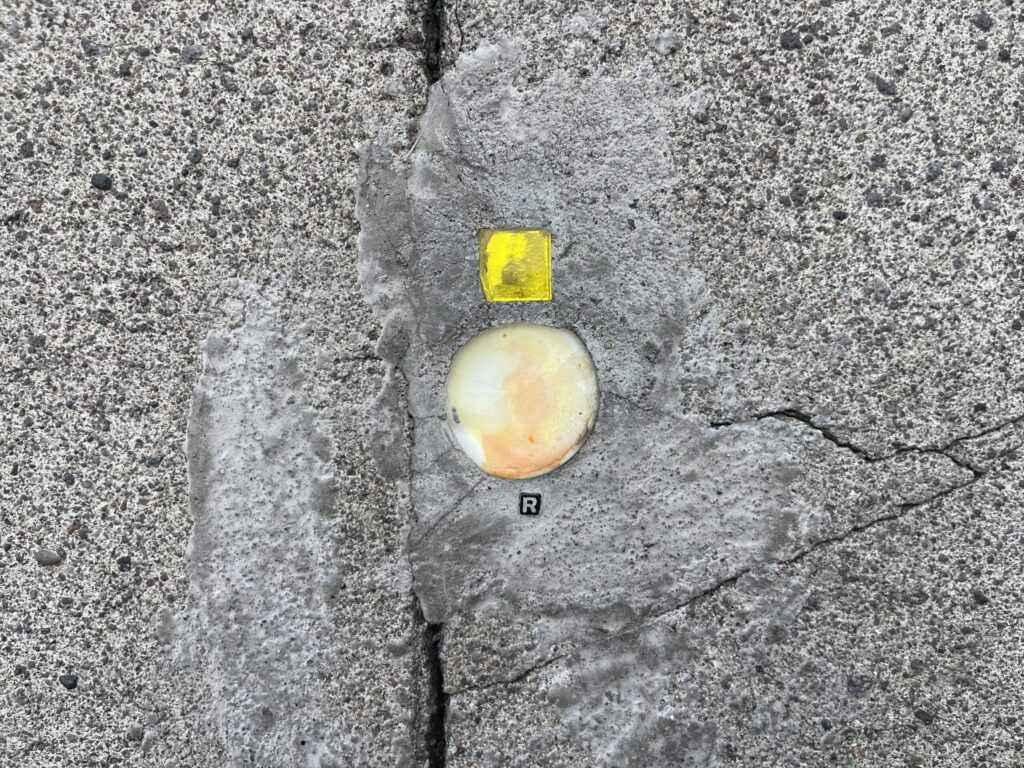
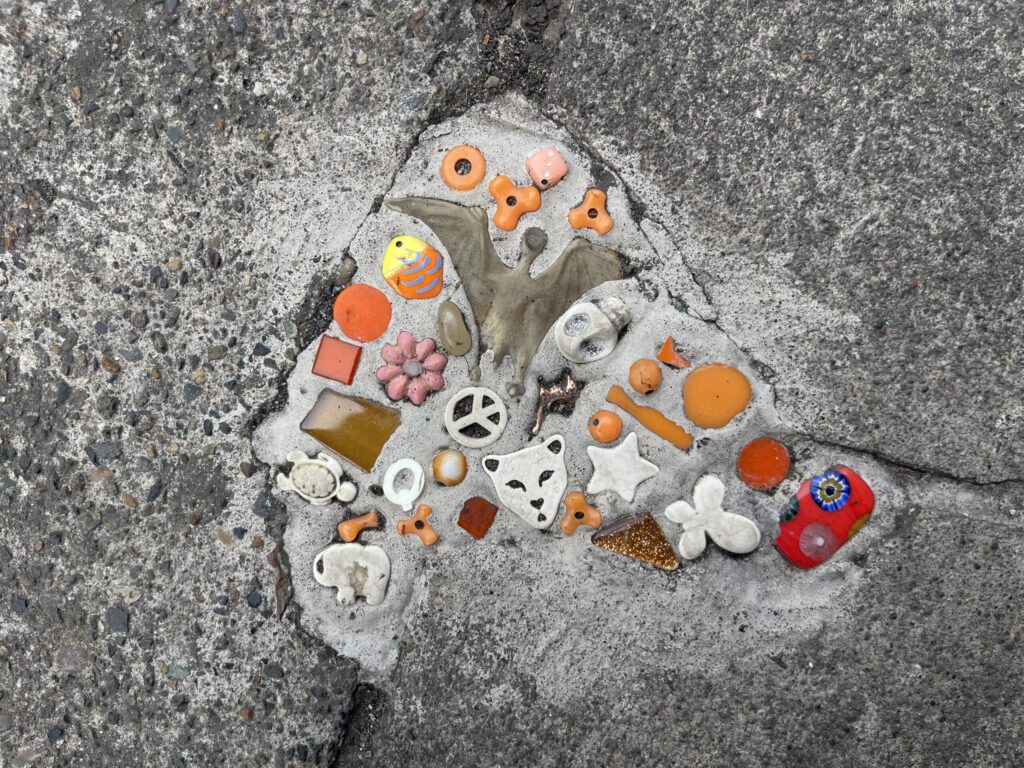
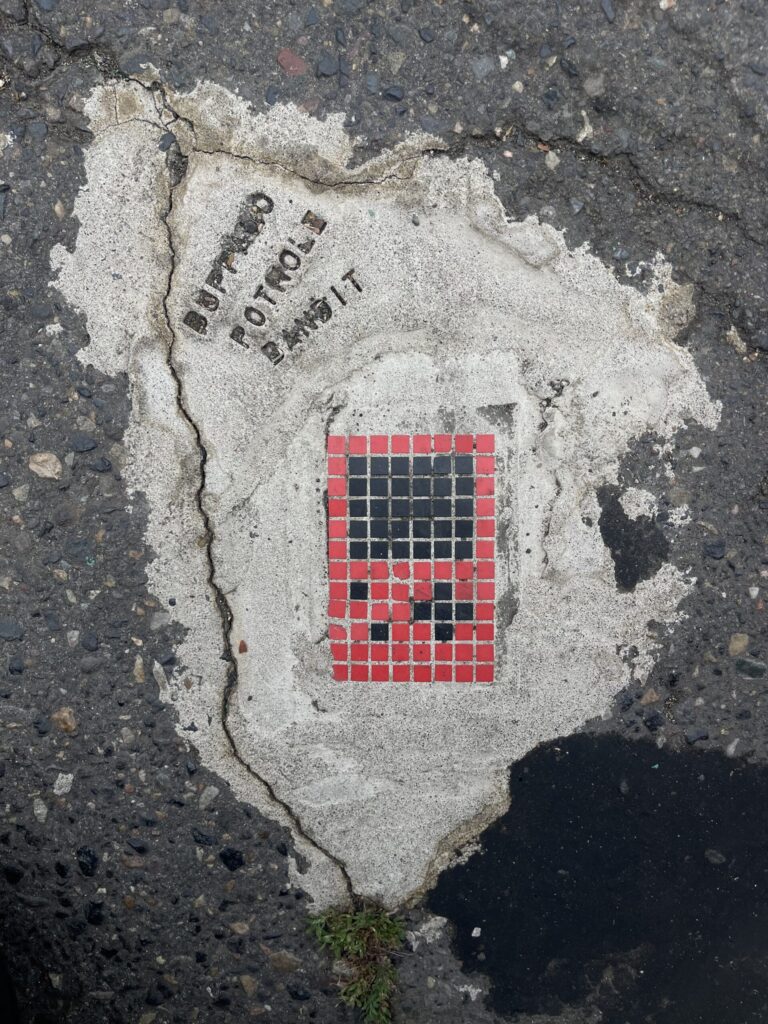
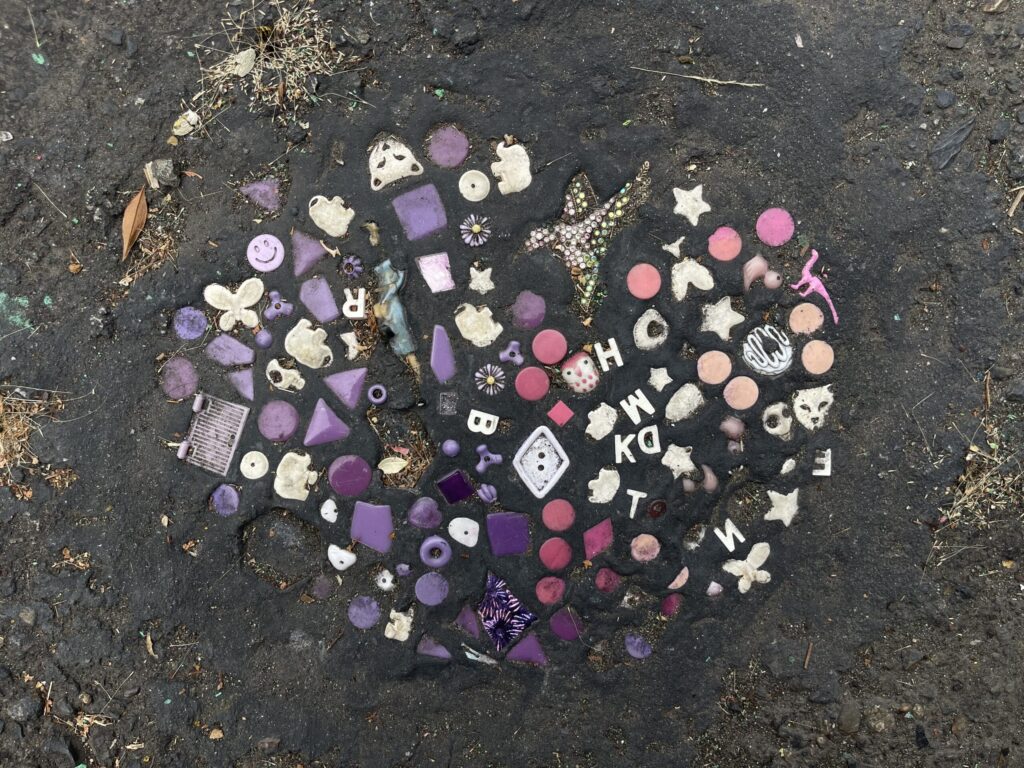
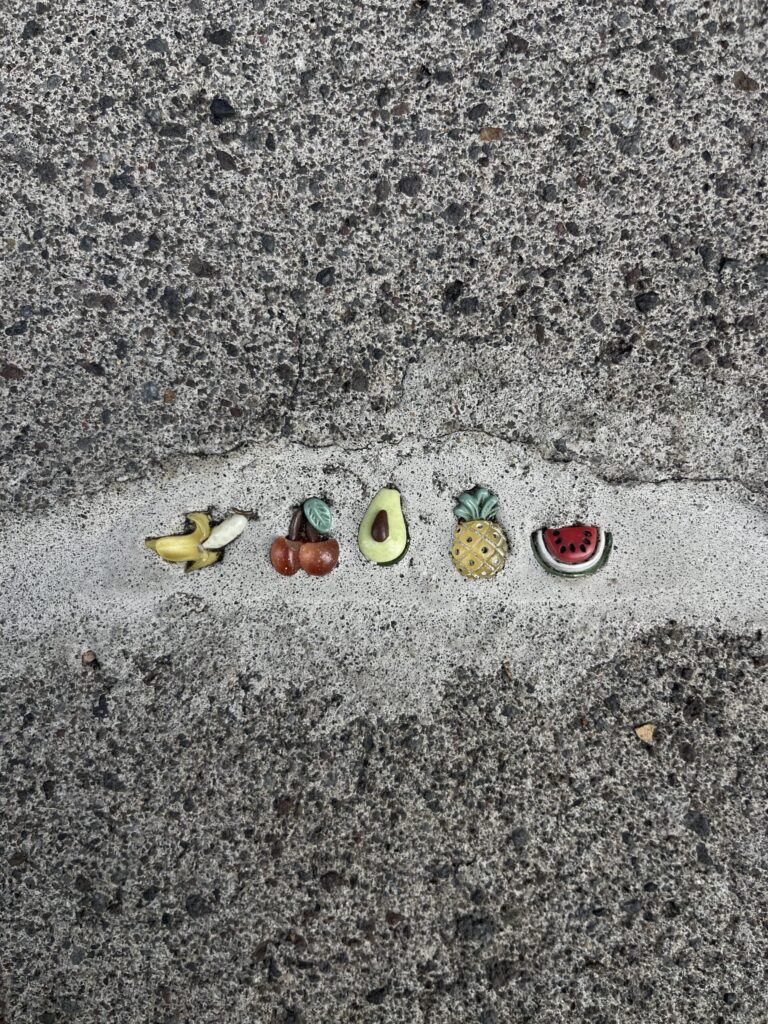
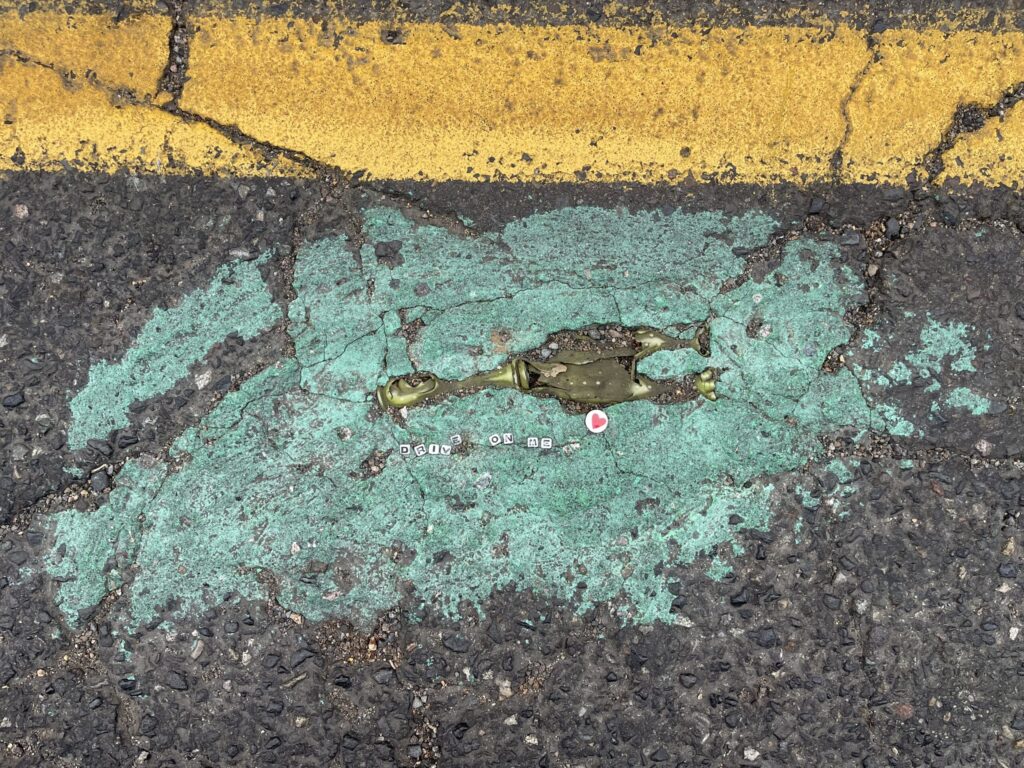
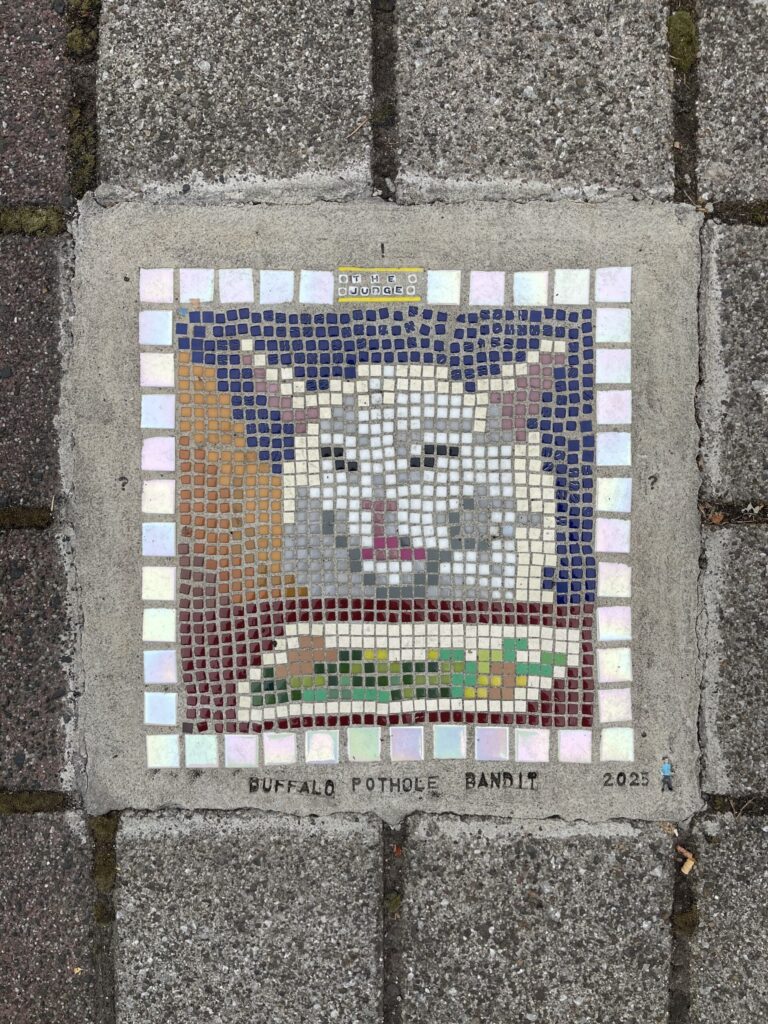
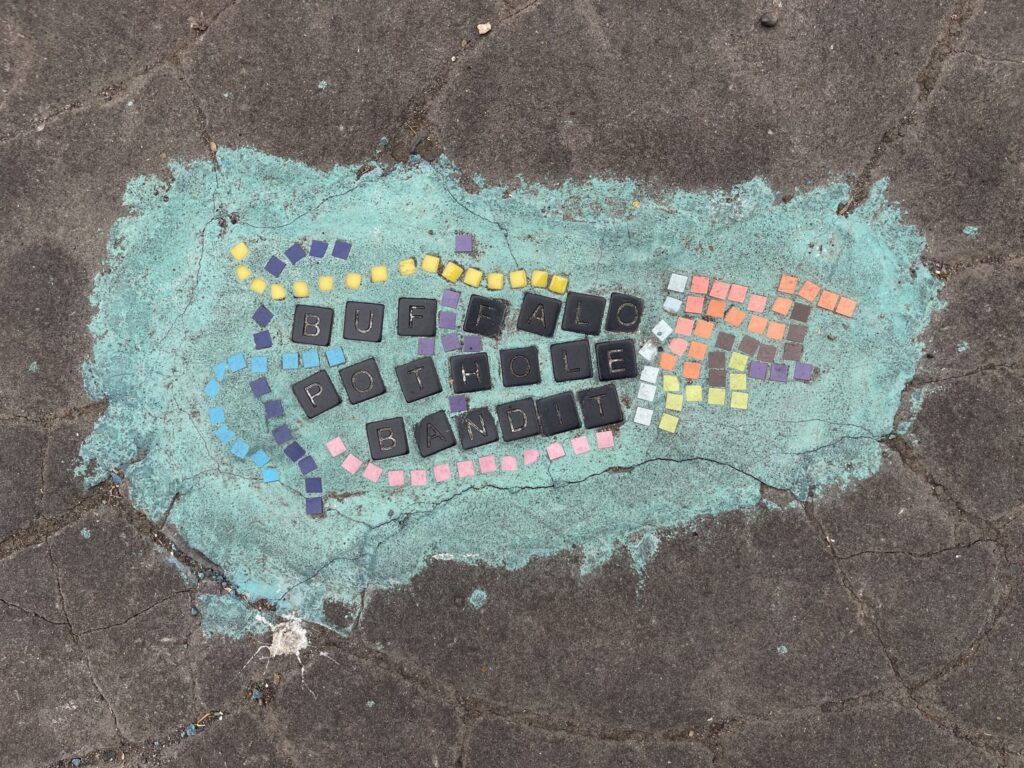
A pothole filled to look like the beloved PDX carpet of yesteryear (#RIP, #neverforget)!!! HOW FUN!!! I snapped a few photos, texted them to a couple friends, made note of the friendship bracelet beads that spell out “BUFFALO POTHOLE BANDIT,” and went on my way. I thought nothing more of it until the other week when I came across another Buffalo Pothole Bandit installation while running an errand in Montavilla.
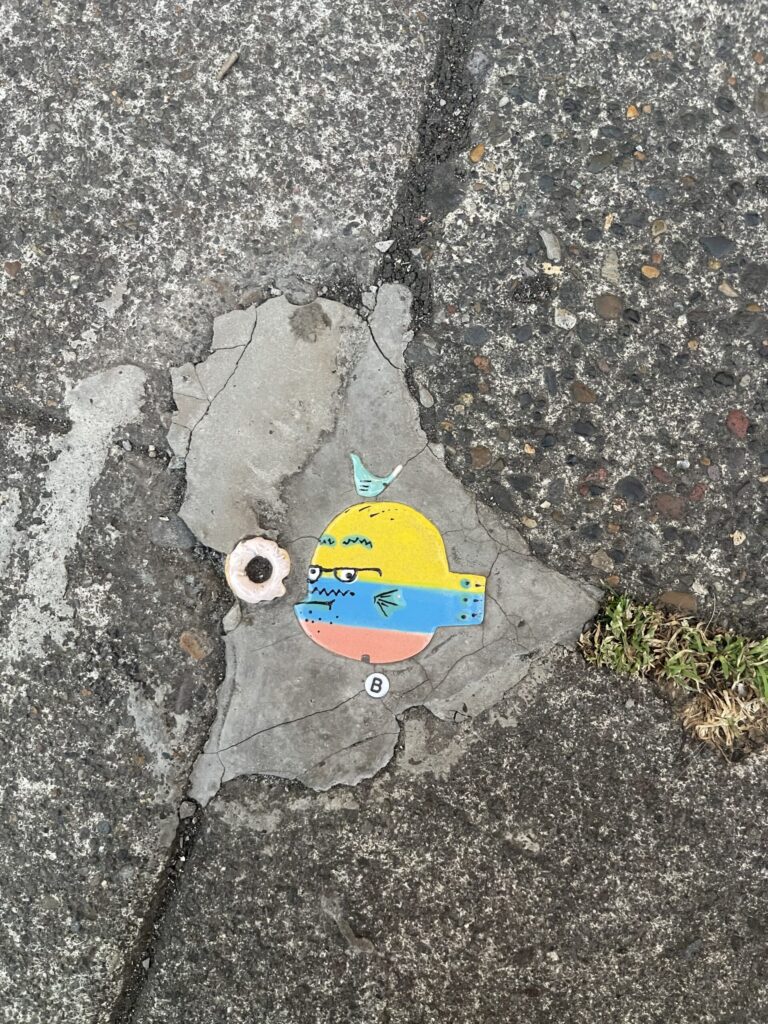
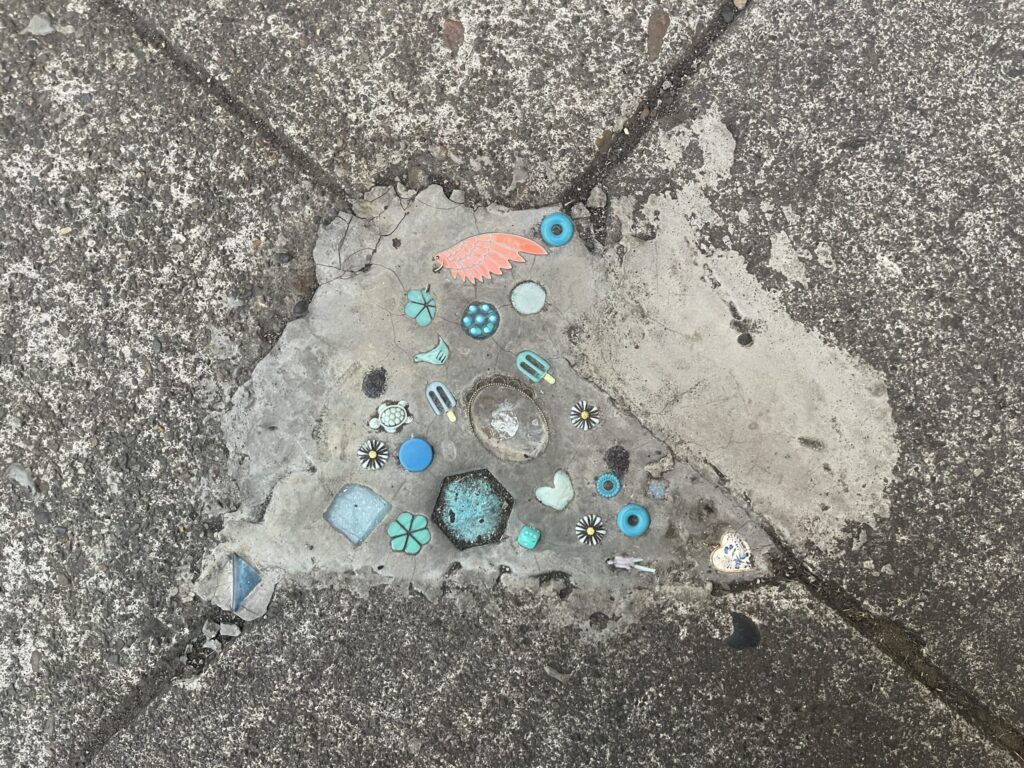
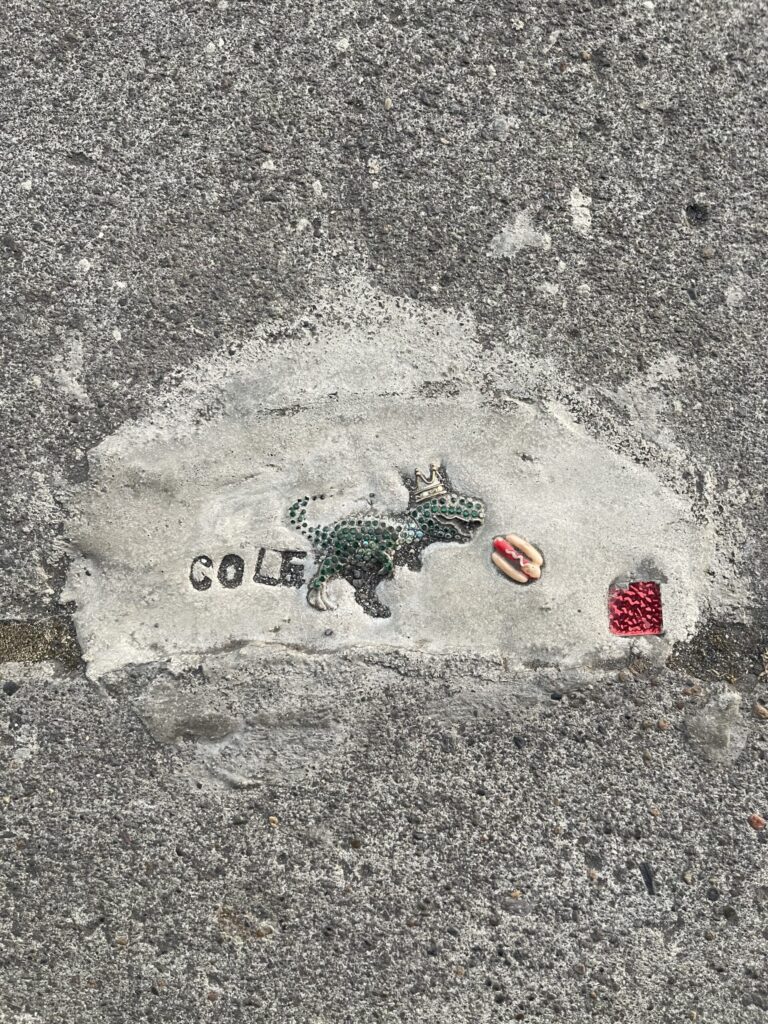
And then another.
And another.
And another.
And another.
And another.
At first, I was simply charmed. Now, I was also intrigued: Who is this person? When did they start making art of the city’s potholes? Why? Are there more of these little installations throughout the city?
The Buffalo Pothole Bandit is a street artist from Buffalo, New York, who began turning potholes into mini art installations in their hometown four years ago: “Since 2022—when they nearly twisted their ankle in front of Breadhive—the Buffalo Pothole Bandit has been turning local roads into public art. ‘I bought a bag of cold patch for $20 because I didn’t want to twist my ankle again.'”
In addition to Buffalo and Portland, they’ve made pothole art in Ithaca, Burlington, Birmingham, Chattanooga, Columbus and Cleveland, New Orleans; and Warren, Pennsylvania. There’s a map of all of their installations; it lists 156 as of this post.
From the map, I learned there are TWENTY Buffalo Pothole Bandit installations on the stretch of street in Montavilla, which means I spotted only about a third of them. There are also a handful of others throughout the city. Once I learned this, I decided to go on a side quest one morning last week to find them all.
First, I went back to Montavilla and hunted down the 14 I missed the first time around. All 20 are in the span of only two blocks and still it took me several passes to find them all. Some of them are so tiny!!
Then, I headed up to the two locations on the map in North Portland, across the river to the two locations on the map in SW, then back across the river to the two locations on the map in SE.
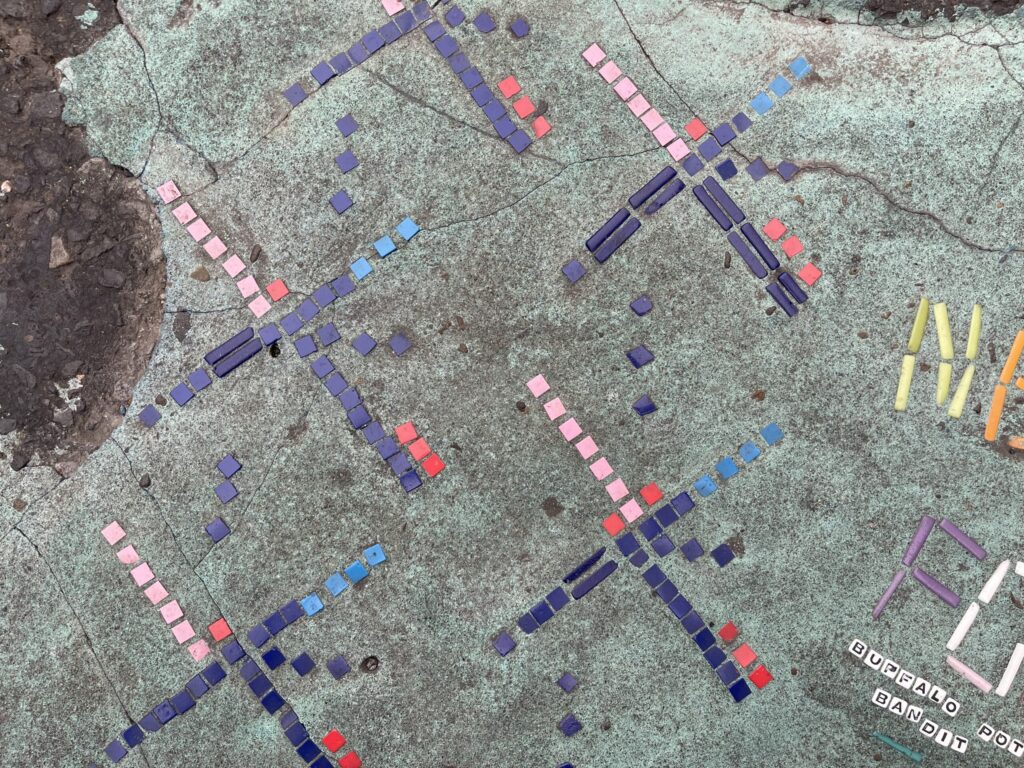
Before heading home, I stopped at the PDX carpet installation to get a couple close-up photos.
With the exception of the two-block stretch in Montavilla that’s home to 20 BPHB installations, all the other locations on the map have one or two—I think. I’m not sure. In all, I found 29 of the 30 in Portland. In theory, it’s possible one of the locations has three. One of these days, I’ll figure it out.
First and foremost: I MISS MICHAEL!!! Michael Jackson was my very first autistic hyperfocus, which means I’ve been blessed with being a fan for roughly 34 of my 40 years on this planet. (Somewhere in a box in a garage on the other side of the country there’s a Polaroid of a 10-ish-year-old me proudly posed on my knees next to our fireplace, surrounded by my carefully arranged Jackson 5, the Jacksons, and Michael Jackson CDs and records.)
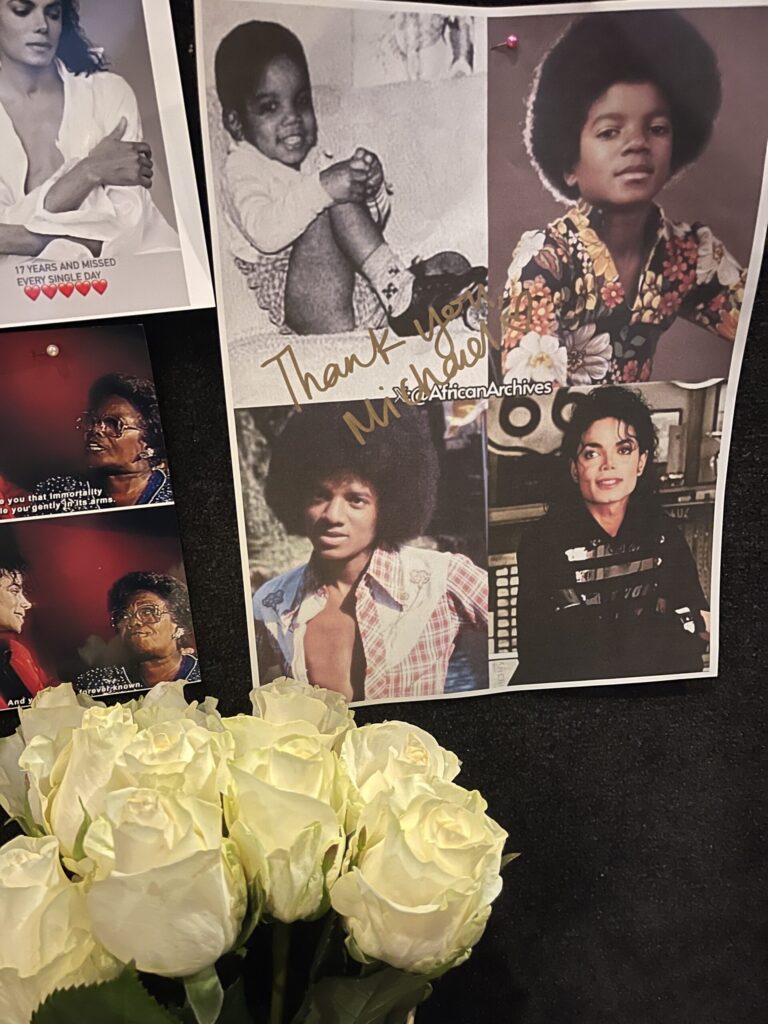
A mini memorial for Michael that I left in the theater on June 25, the 17th anniversary of his death.
The amount of both joy and grief that I—and many, many others—have been experiencing since the release of Michael is overwhelming. What the world did to that man is unforgivable. It makes me profoundly sad and angry.
I’ve seen the movie 50 times in the theater and every single time I leave feeling both heartbroken and inspired. It’s like pressing a bruise to feel both pleasure and pain. Since the movie came out, every day I’ve tried to be more like Michael; every day I’ve looked for every opportunity to bring more love, joy, and kindness into the world.
To have been alive during the same time as him, and to have been old enough to “get it,” is the great privilege of my life. (When I was growing up, it pained me—an actual physical ache—to not be closer in age to Michael. I wanted so badly to have been his peer, especially during the Jackson 5 era, which was my first favorite Jackson era. I would cry and cry over the unfairness and indignity of having to be 10 years old in 1996 and not twenty. For reasons I still cannot explain, I felt deeply connected to him. I still do.)
Orange juice and Oranges. Given Michael’s love for orange juice, learning, and reading—and for reading nonfiction in particular—I wonder if he ever read John McPhee’s Oranges, a book about oranges and orange juice. It’s such a fun, funny, interesting, informative, engrossing, and charming read. It’s also a quick read, partly because of how enjoyable it is and partly because it’s only 146 pages. I love it so much. It’s one of the very few books I’ve read multiple times, it’s the book I most often suggest to others, and it’s the book I most often gift to others (and everyone I’ve suggested it or gifted it to has had only positive things to say about it). I NEED to know whether he read it and if so what he thought about it.
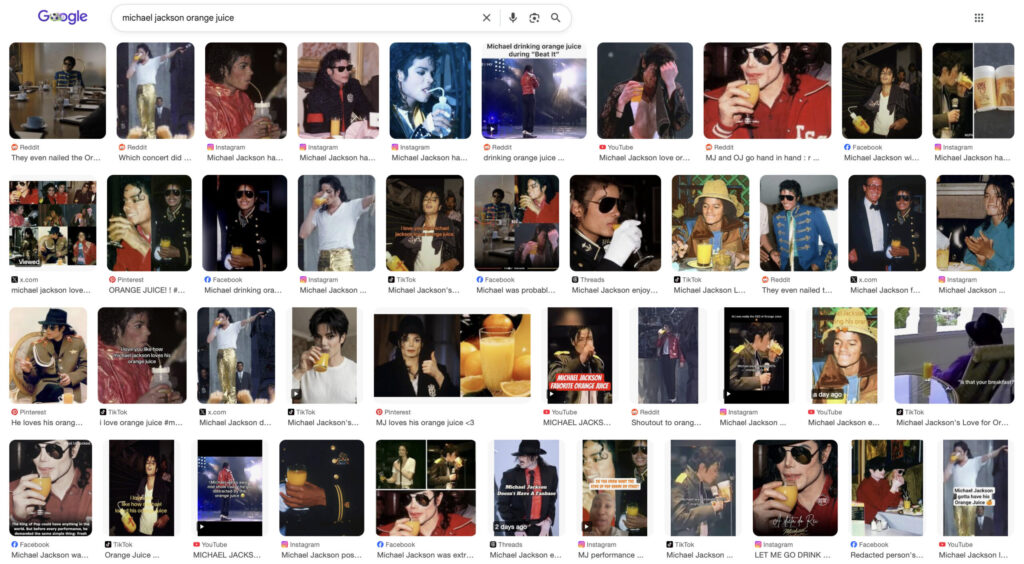
If you’re not familiar with Michael and orange juice, even the most cursory of google image searches will quickly acquaint you with the topic.
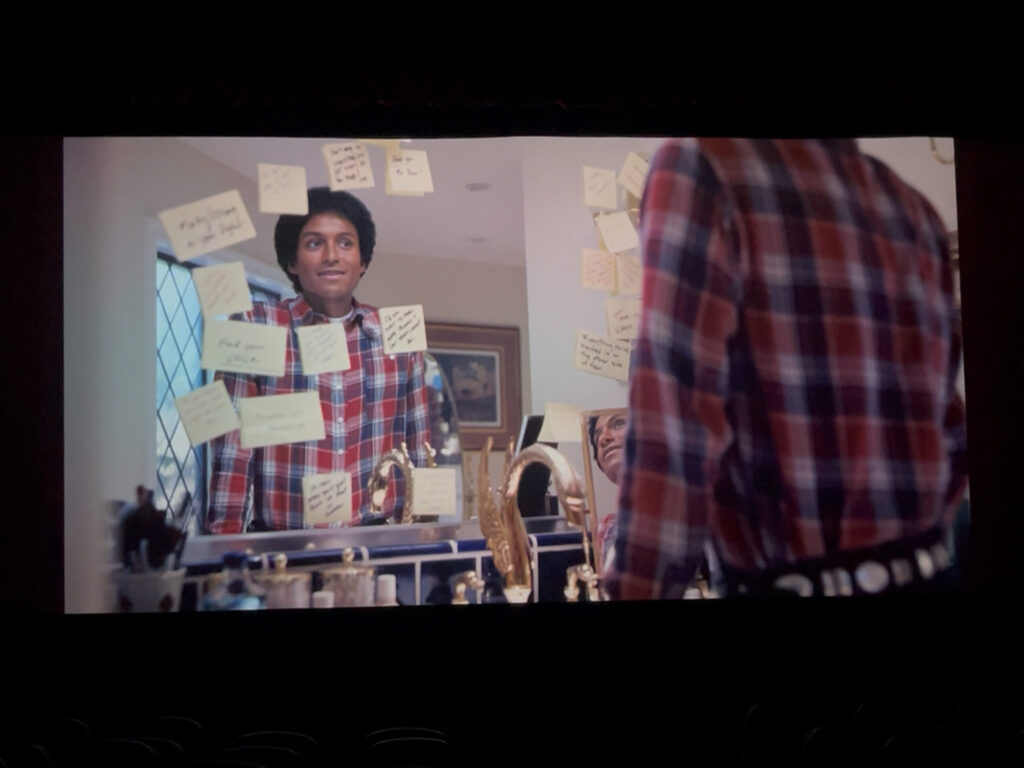
I love that the film includes his love for orange juice. You see glasses of it in several scenes: on the coffee table in the 1971 scene at Quincy’s home; on the table in front of him during the 1981 meeting during which he meets Branca; in his hand while working on “Beat It” in his home studio; on the floor next to a bowl of popcorn during the transition from “Beat It” to “Thriller”; on a coffee table in his room at the very end of the “Now, I’m gonna call Don King and tell him you’re doing the tour” scene; during the first hospital scene when the doctor is discussing his injury with him; and on the tray of food Bill brings into his hospital room in a subsequent hospital scene. And, finally, during both the Victory and Bad tour scenes, you see on the drummer’s riser squeeze water bottles filled with orange juice.
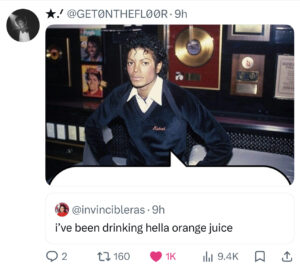
Two of my favorite MJ x OJ memes that’ve come out of the current Michaelmania:
We need more cultural MJ paraphernalia. Specifically:
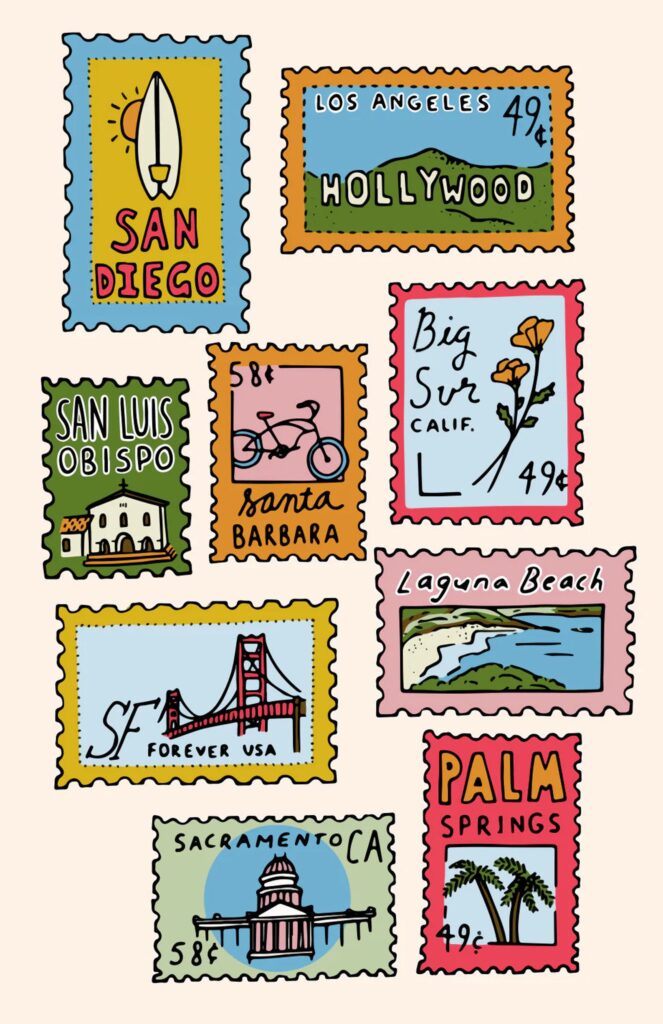
A series of Michael Jackson postage stamps, each including photos of him during and iconography of his different eras
Michael Jackson emojis representing his different eras
An entire universe of Michael Jackson LEGO sets of, for example, his different eras, his signature poses/silhouettes, iconic performances, him with various animals, and the grounds of both Hayvenhurst and Neverland Ranch
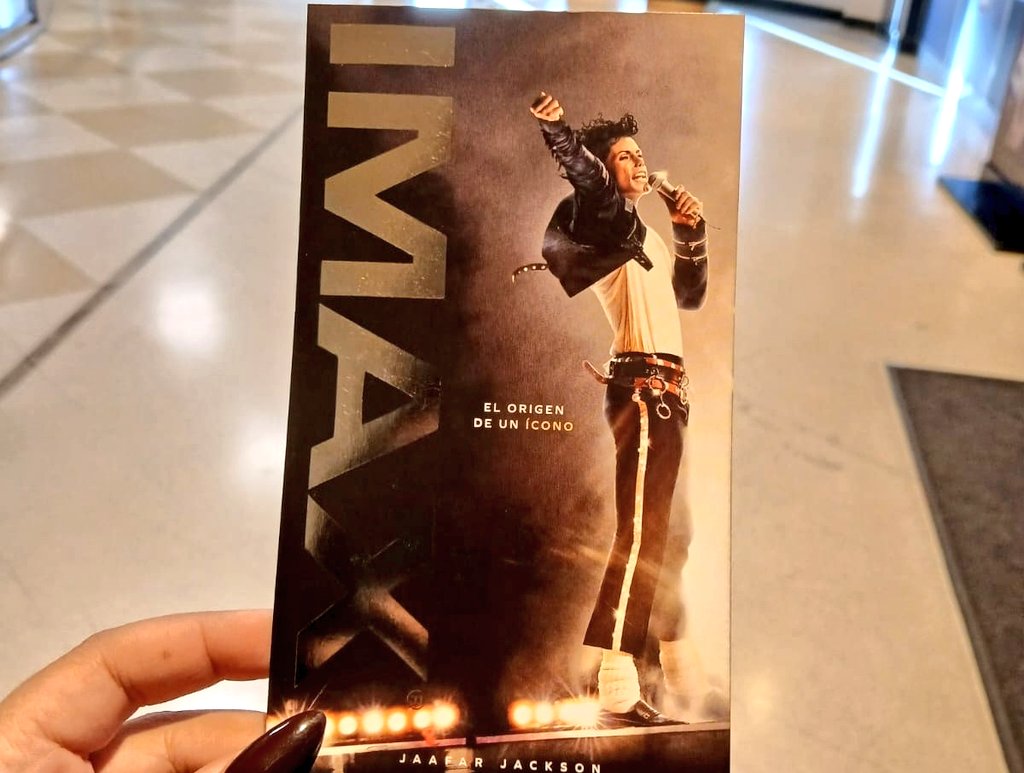
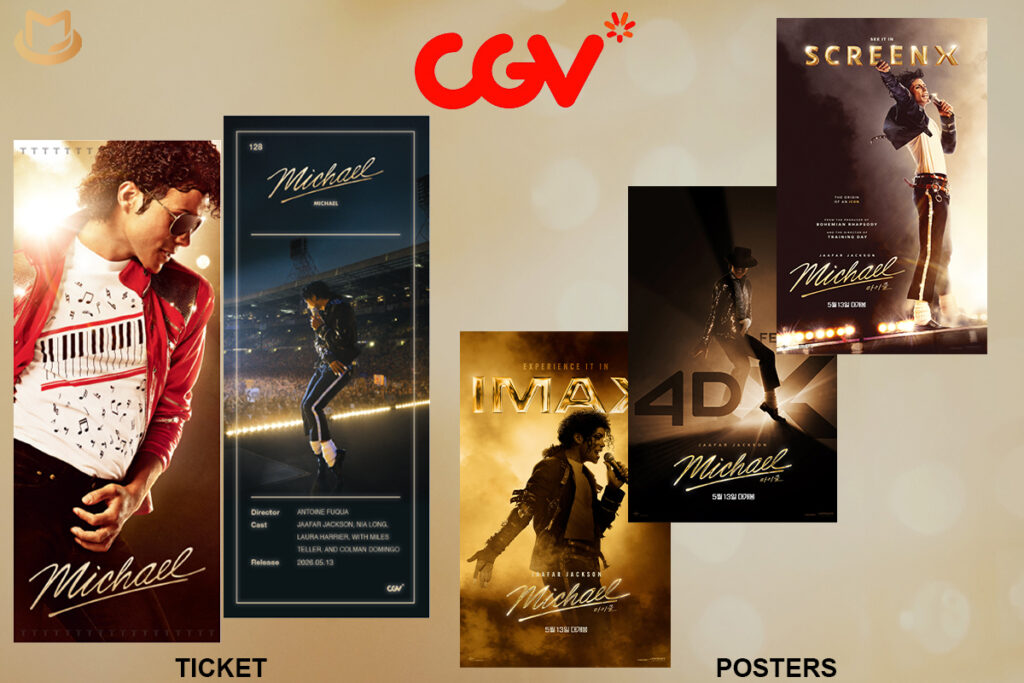
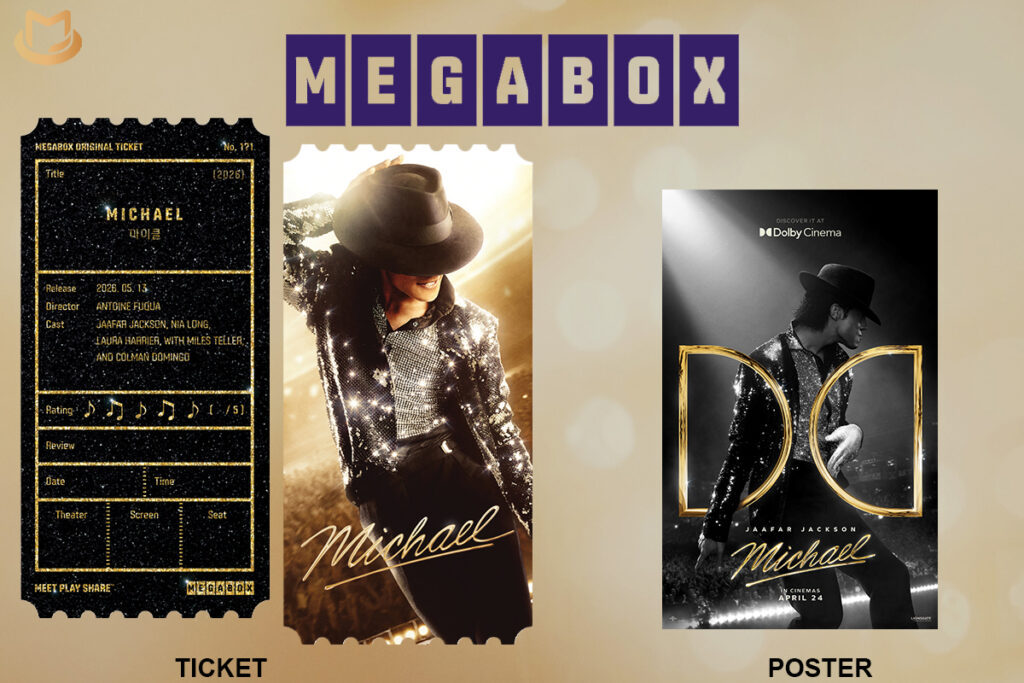
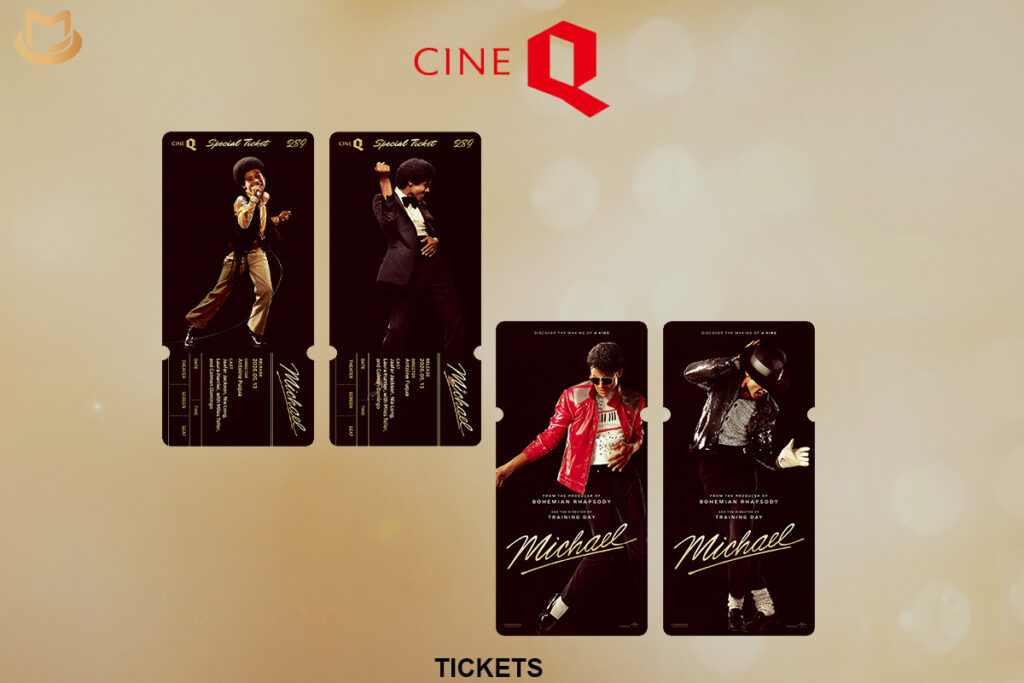
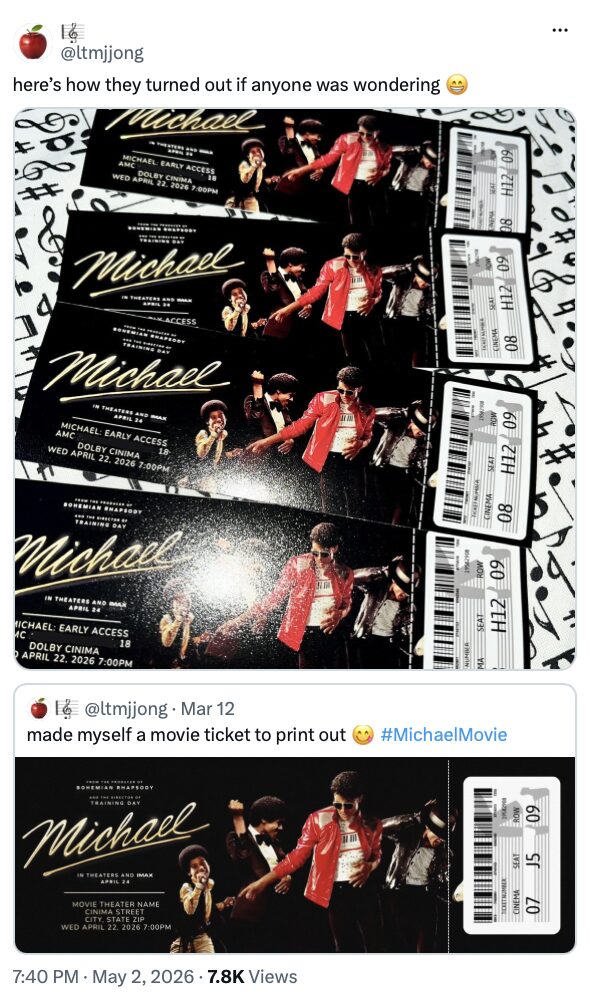
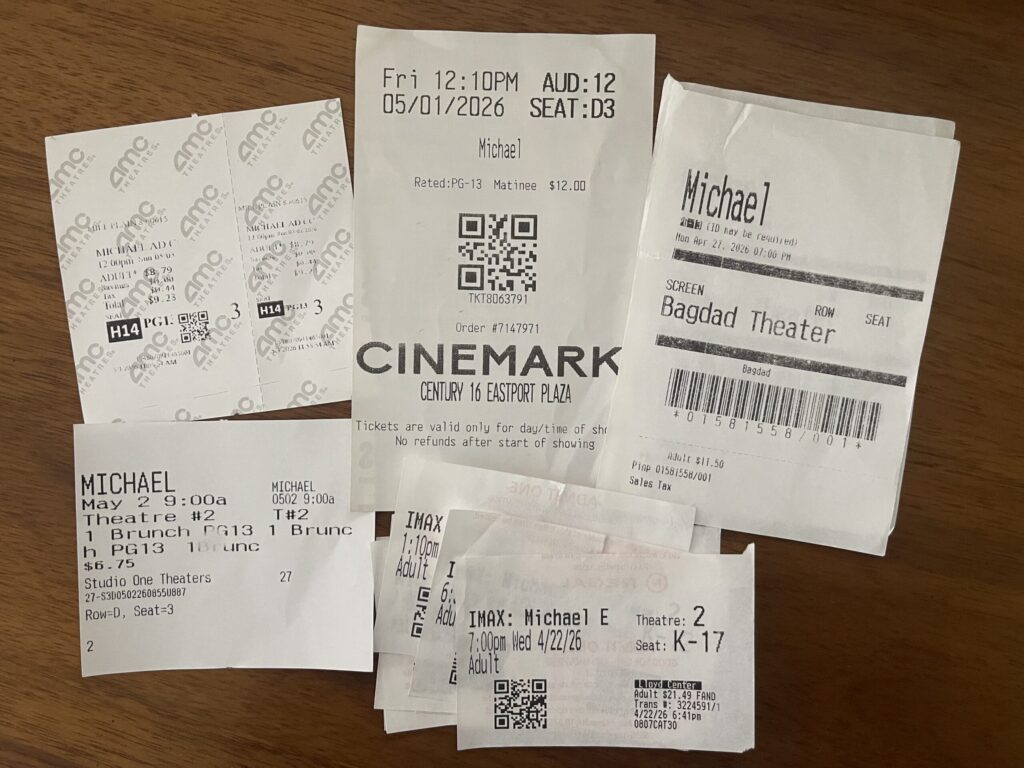
Bring back physical ephemera!!! Stop with this receipt-paper-as-movie-ticket-stubs bullshit!!! No one wants it!!! We want well-designed, quality-crafted movie ticket stubs (and other physical ephemera), especially for special cultural events, like a huge movie release. They’re fun and make the experience more special. Look at these specially designed, collectible Michael tickets in South Korea and Argentina. American theaters, studios, and distributors: get your shit together!!!
Seriously, enough with this flimsy, fading receipt paper bullshit!!!
Fan screenings. To no one’s surprise, America also shit the bed re: fan screenings. I can’t tell you how many videos I’ve seen online of theaters in other countries hosting special fan screenings where moviegoers were encouraged to dress up, and to sing and dance along during the performance scenes. Some also hosted karaoke of Michael’s songs before the movie played. Once again, we American fans were robbed. (I reached out to a local theater that hosts similar fun film-related events to ask if, since the movie is now streaming on digital, they have plans to host such an event for this particular movie, or would consider it. They said no.)
Exhibit A: China
We held a #MichaelMovie special fan screening on Saturday in Shanghai, China, at the biggest screening hall, which can accommodate more than 1,000 people. This is fabulous! An event Michael deserves! #MichaelJacksonpic.twitter.com/iBTbTyB1ZM
This is it! The celebration in China and around the world for #MichaelJackson!! Our special recap video for all of you, all of us! #MichaelMovie , the biggest music biopic of all time!! #TheYearofMichael Hope you love it!! Thank you MJUHD for creating this amazing, exciting and… pic.twitter.com/2E6f56ZVoE
Movie theaters aren’t freezing cold anymore. At least, not the big box ones. When I’m indoors in a space where I don’t have control over the thermostat, which is basically everywhere, I am almost always freezing cold, even if it’s 100 degrees outside. Like, I routinely carry a sweatshirt, socks, and gloves with me year-round because it’s more likely than un- that I’ll be that cold inside whatever establishment I enter.
While I don’t have many memories of movie theaters—not only is Michael the only movie I’ve seen in theaters more than once, the number of times I’ve seen this particular movie in the theaters is greater than the total number of movies I’ve seen in a movie theater throughout my entire life—every pre-Michael memory of a movie theater I have involves being freezing cold. I’m happy to report that wasn’t my experience at any of the theaters I watched Michael at.
Can you believe I didn’t need socks or gloves or even long sleeves or pants at any of the showings? That shorts and a tank top and Birks with no socks were just fine? And that multiple times I had to take off the sweatshirt I brought with me because it was too warm to wear inside the theater? This was not my experience at the independent and historical theaters I visited during the Portland Movie Theater Project, which were cold enough to require layers.
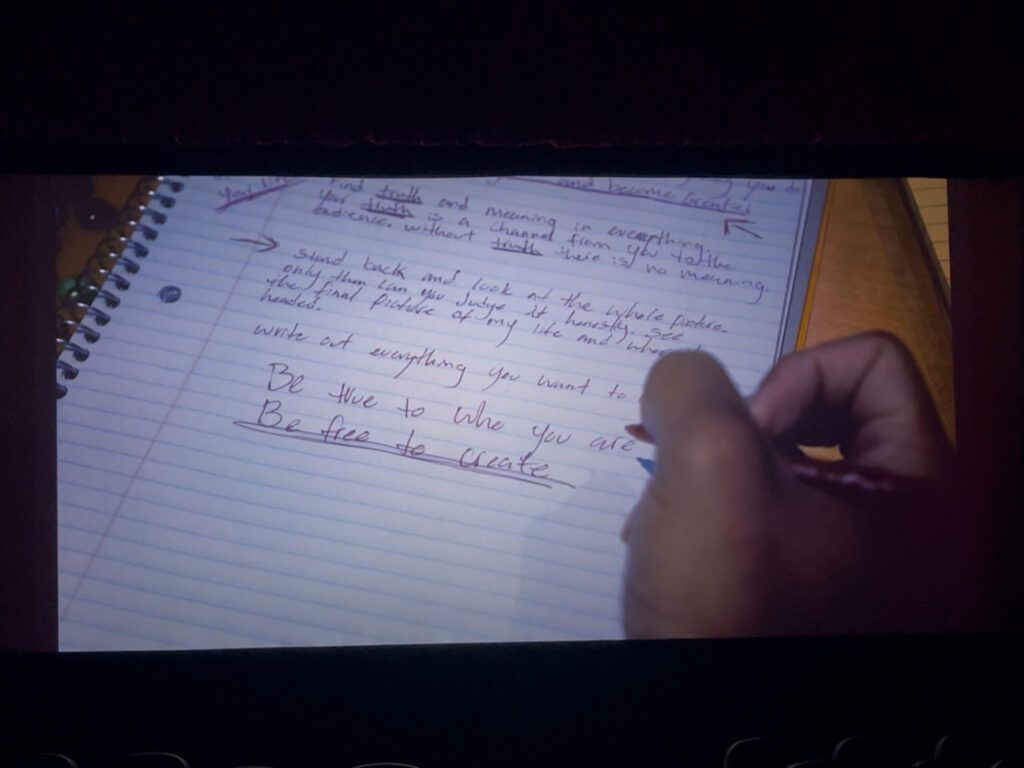
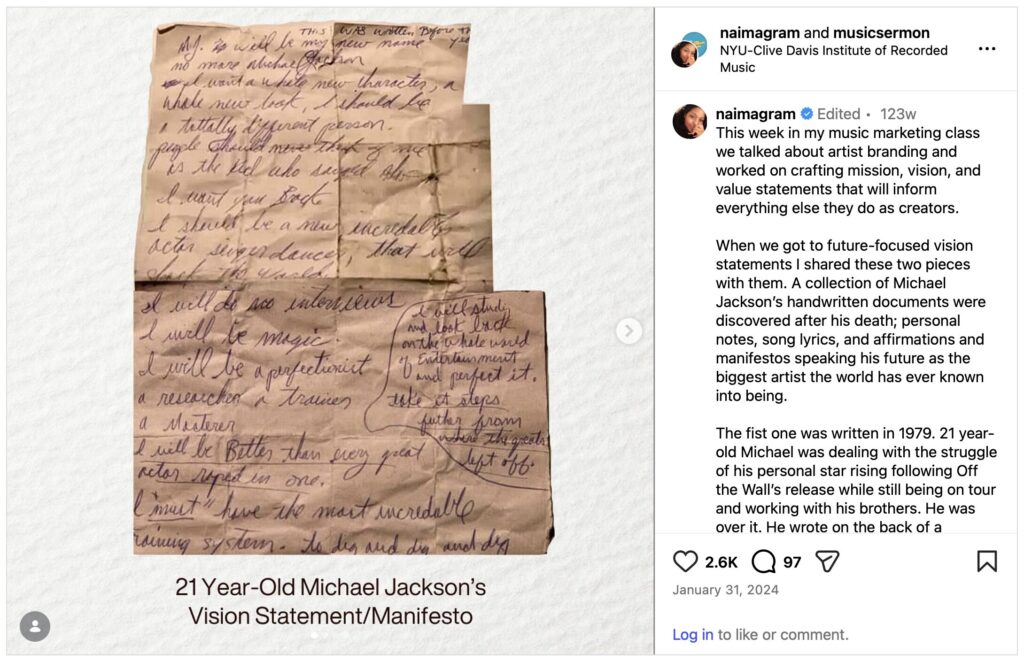
Affirmations and manifestation. It’s well known that Michael was a master of affirmations and manifestation, and I appreciate that the movie included this aspect of him and his life. I’m curious to know when and how and by whom he was introduced to the concepts and practices of both, and whether he had to overcome any resistance to the idea of either.
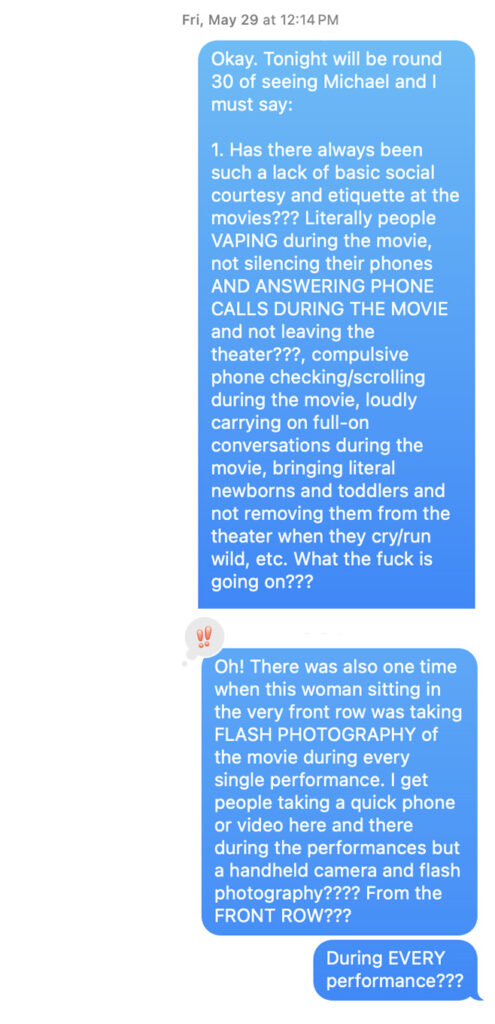
Movie theater etiquette. What in the fuck happened to movie theater etiquette??? Back when I was doing the Portland Movie Theater Project, the erosion of movie theater etiquette was the discourse of the day several different times on Twitter. I almost said so in my post about the project. I didn’t because I never once experienced anything but what you’d expect to encounter at the movies: people being quiet and watching the movie without distractions or disruptions. Not so with Michael!
A sampling of offenses I encountered, most of them more than a few times, too many of them in nearly every showing:
Vaping. VAPING!!!
People having full-on conversations throughout the entire movie. Shut!!! Up!!!
Screaming young children and babies whose adults who brought them did not remove them from the theater; they just let them scream through the movie. Ditto to running up and down aisles and in and out of the theater.
People not silencing their phones, even after they ring during the movie. In one instance, a person fully answered their phone during the movie and carried on a conversation right there in their seat???
Flash photography??? In one showing, a person in the literal front row took flash photos on a digital camera during every single performance scene. That’s basically the entire movie. Absolutely unhinged behavior. I understand taking a cell phone photo or video here and there—I did so myself. I do not understand taking FLASH PHOTOS FROM THE FRONT ROW for most of the movie???
Compulsive phone usage. And with the brightness turned all the way up!!! So many people spent so much of the movie checking and scrolling their phone that it legitimately concerns me. No one has an attention span!!!
Laughing at inappropriate times, like the nose scenes and the belt scene.
What’s the point of paying to go to the movies if you’re not going to actually watch the movie??? Why are you there if all you’re doing is fucking around on your phone—with the brightness on full blast!!!—or talking the entire time or wandering in and out of the theater a bunch of times??? Shut up and sit down or stay home!!!
To clarify: I would have LOVED if my fellow moviegoers were into the music and sang or danced along. It would’ve been so thrilling to feel that connection with other fans (unfortunately, all of the screenings I attended were full of people who didn’t even bop their damn heads during any of the performances). What I don’t love is people having conversations about fuck-all during the movie.
Too many trailers. Thirty literal entire minutes of trailers before the main feature is ridiculous. You can show me three 90-second trailers max. There is no acceptable reason a movie should begin thirty or more minutes after its advertised start time.
Seeming contradictions of Michael’s life. There are several seeming contradictions of Michael’s life repeatedly portrayed in the film. The three I can’t get out of my head:
His assertions (dare I say, insistence) in young adulthood that he’s “not a little kid anymore” and no longer “a boy in a kid band” and “not a child anymore” while also shown engaging in things often associated with being a child: living at home, watching cartoons, surrounding himself with toys and games, etc.
His desire to be mysterious and the deep pain of loneliness and not being known (like, as a person, in personal relationships).
His oft-repeated messages of love and non-violence and his signature style, which was heavily inspired by military dress—the military obviously being an inherently violent institution.
I also keep thinking about the four lines from Joe toward the very end that are dubbed over visuals of the Jackson brothers stepping onto stage for the last night of the Victory Tour: “I told you what to think” and “you think you’re better than me?” and “you’re not like everybody else” and “nobody outside this family will understand you.” How confusing and isolating and demoralizing those mixed messages must have been. (I do realize the real Joe Jackson likely didn’t say those exact words to Michael. I believe the underlying sentiment communicated by those lines of dialogue in the movie was a theme in Michael’s real life.)
Michael Jackson is every generation’s Michael Jackson. There will never be another Michael Jackson. No one will ever come close. He is a once-in-humanity soul. I’m so grateful to and proud of everyone who made this movie happen. I cannot wait for it to break its final record and cross that $1 billion mark (we’re about two weeks away), and I hope to see the American film industry properly recognize and award the cast and crew for their incredible work.
By the grace of whatever powers that be, I was blessed with a coveted spot in the Spring 2026 security envelope pattern swap, a twice-yearly international snail-mail event for nerds hosted by the Office of Collecting & Design. How it works: each participant receives five names and addresses to send at least five different patterns measuring at least 2 inches square to.
Thrilled as I was to make the cut, I was also stressed the hell out!! I wanted to send samples of less common patterns since most people already have the more common patterns in their collection, and also I didn’t want to cut up (ruin!!) any of my envelopes, an idea that physically pains me. A conundrum. Ultimately, as I flipped through my binder of envelopes, I considered only those patterns that I had at least two envelopes of, so that at least one of each pattern would remain in my collection intact. To the five addresses I received, I sent 2-inch-by-2-inch samples of six different patterns:
On account of the autism, I keep track of where each envelope in my collection comes from (and the date I receive it). I think it’s fun to see which patterns different businesses, organizations, and industries tend to use (the most visually interesting patterns in my collection come from mail sent by government agencies). For the curious, the patterns I sent came from (from left to right): OHSU, Tricare, the VA, the VA, USAA, and USAA.
To date, I’ve received five patterns each from four different people:
Of the 20 samples I received, 10 are new to my collection, and nine of those 10 are patterns I’d not seen before, either in the wild or online.
I loved seeing that orange pattern and the branded ones—so few of the security envelopes I encounter are branded, or are a color other than black, grey, or blue.
It does bother me a bit to have only a small sample of these patterns and not entire envelopes, and also I’m very grateful (1) that sending full envelopes isn’t a requirement to participate because I wouldn’t be able to part with five entire envelopes of five (or more) patterns, and (2) to have been made the cut for this iteration’s swap and to have received each of these patterns. I had a lot of fun participating and hope to snag a spot in at least one more future swap.
Back in November, Pinterest successfully influenced me into Swedish death cleaning several decades early by placing in my feed a single pin related to the practice at exactly the time I began outlining a plan for a hypothetical move that I might be able to make in two to three years. Perfect timing! Why not turn a traditionally end-of-life decluttering practice into a mid-life, possible pre-move decluttering project? And why not get as much decluttering done as I could before the new year and start 2026 extra light and fresh? Four-ish months later, I’m finally and officially done (“done”).
I don’t own a ton of stuff to begin with (visual busyness and clutter easily overwhelm me (autism)), and I’m a pretty organized person by nature (also autism), so the project didn’t feel daunting to me. Still, my son and I definitely had extra stuff, and a few things would benefit from improved organization. The project took me longer to complete than I would’ve liked, mostly because (1) I didn’t have many spoons or much space to go through things; leaving things out to go through them here and there wasn’t an option because of how dysregulating visual busyness and clutter are to my nervous system, and because of how small my apartment is; and (2) I was committed to how I got rid of things.
To start, I made a list in my phone of the stuff I wanted to get rid of. Then, I organized the list by items that could be rehomed, those that could be recycled, and those that had to be thrown out.
Anything that could be rehomed, I either gifted to friends or my daughter, set out in free boxes, or donated to places and organizations that redistribute items directly to people who need them for free (as a rule, I will not donate to organizations that turn around and sell donations). For example, I donated clothing and small household items to the Portland Free Store; I donated books and unused stationery and paper items (planners, notebooks, greeting cards, etc.) to various Little Free Libraries in my neighborhood; I donated old magazines and various memorykeeping and craft supplies that I’ve had in my collection forever and won’t ever use to SCRAP PDX; I donated extra hygiene items to the mutual aid lockers at Always Here Bookstore; and I donated food that we wouldn’t eat before it’s sell/best by date to my neighbors and various free pantries in my neighborhood.
Anything that could be recycled, I recycled rather than threw out. For example, I recycled old electronics and cords, pens, ink cartridges, etc., at Staples through their recycling service; I recycled stained or otherwise damaged clothing, bedding, and other textiles via Just Porch It; and I recycled old paint through my county’s hazardous waste disposal program. Thankfully, all of these programs are free where I live.
I had three items that weren’t free to recycle: two laptops and one very old and very slow 27″ iMac, which I loved and was sad to let go of. Because these items had personal data on them, I took them to an electronics recycler who removed all three hard drives, destroyed two of them, and, at my request, gave me back the other one. All in all, it cost me $37. I also paid about $5 to have a huge stack of papers shredded at Staples.
I do realize that paring down possessions years before a possible move is a little…ambitious. Consider: Starting now affords me time to think about what I want to do with items I’m undecided about without feeling rushed into a decision it’s more likely than un- that I’ll regret (I say this from experience, as someone who has moved long distances several times).
In addition to paring down my possessions, I used this project as an opportunity to better organize some of my paper items, and some of the stuff we keep in storage. For example, I better organized my product manuals, which I keep in plastic sleeves in a binder, by grouping them by room instead of by type; I went through a stack of things my kids have made for me and organized them by child and approximate year; and I bought a large zippered bag (with handles!!) to store all the signs and posters from art builds, rallies, protests, and other direct actions I’ve participated in.
Initially, I considered buying a large, flat box with a lid that opens up (like this) for these items since for now I store them under my bed. Then I learned how much large, flat boxes with a lid that opens up cost (hello???) and decided to look for other options. I’m happy with this one. It achieves my original goal—it easily stores under my bed—and has the added bonuses of being much more affordable, much easier to carry than a giant box, and, unlike a cardboard box, rain-resistant, which could come in handy during a move.
In general, I don’t like to store stuff. I don’t even like having my kitchen cabinets or the sections of my TV stand (etc.) full (or anything under my bed!). It stresses me out when every space in a home is crammed with stuff, even when it’s behind a closed door or in a drawer (or under a bed!). For better or worse, “out of sight, out of mind” is not a thing for me.
Ideally, I’d keep only seasonal and occasionally used items in storage. Christmas decorations, suitcases, painting supplies, things of that nature. Because my apartment isn’t big enough for all of my books, or to display most of the memorykeeping albums I’ve made over the years, many of those items are in storage until I move into a larger living space, along with our seasonal items. Thankfully, my rent includes a small storage space in the basement of my building.
I also used this project as an opportunity to better organize the items we do keep in our little basement storage space, and, to no one’s surprise, made a spreadsheet to inventory it all. Whenever we do end up moving, I’ll already know exactly what’s in which storage container, and where each container is located. This information will also be helpful when having to figure out how big of a moving truck or pod we’ll need.
One of the highlights of this project was finding the only three items in my possession that I’ve not been able to place for years. I knew each of these items were somewhere in my apartment, I just didn’t know where. Turns out, they’d fallen into the very bottom of a box—as in: under the bottom flaps inside the box—while moving boxes around when my son moved in with me. It’s kind of a miracle I found them, which happened only because I lifted up the flaps to break down the box for recycling and saw them.
The photo strip is from my first time in a photo booth, the summer I turned twenty-one. RIP to true old school film photo booths.
The concert ticket stub is from the Warped Inside Tour lineup that New Found Glory headlined at the Roseland Theater a billion years ago. The venue itself is upstairs. That night, during one of the opening band’s sets, the floor began to buckle and break and the venue evacuated the building. After what felt like forever we were allowed back inside and the show continued, with New Found Glory playing their set on the ground floor. My friends and I ended up right up front, directly in front of the stage, and I left the show with a set list, given to me by Chad himself.
For the last several years it has been my life’s mission to find this ticket stub so I can have it framed alongside the set list, a photo I took (on a film camera!!) that night, and a sticker I bought from the band’s merch booth. These few things are some of the only physical items remaining from my youth and for that reason alone are some of my most prized possessions. I screamt an actual scream when I found the ticket stub.
I bought the brass crane embroidery scissors at Cargo in 2020 simply because I think they’re pretty—I have no practical purpose for them; I don’t think I’ve ever actually used them—and have missed looking at them since misplacing them a few months after I bought them. I’m happy to have them back at my desk.
Another highlight of this project was looking through and inventorying my newspaper collection. More about that in a future post.
If you’re interested in adopting or adapting Swedish death cleaning as your own pre-move or spring cleaning approach, my main suggestions are:
Store items in a way that makes sense for you (and your family, if relevant). For me, this means storing like items with like items, and using durable storage containers, most of them clear, that will double as already-packed moving boxes when the time comes.
Create an inventory of the items you store. Include information like what containers you’re using, what’s in each container, each container’s dimensions and volume, the location of each container, how full each container is, etc. You might also keep a list of any empty containers you end up with, to help avoid accidentally buying new containers that you don’t need because you forgot you have empty ones waiting to be used. I recommend doing this in a spreadsheet.
Label your storage containers, especially your non-clear containers. If keeping a spreadsheet, you might also print each container’s inventory and affix it to the top of the container’s lid or place it inside the container.
However long you think the project will take, budget at least twice that amount of time.
Dedicate a container to items you’re not sure about. The point isn’t to get rid of everything. The point is to make considered decisions about what to get rid of. It can take time to make those decisions.
Store personal keepsakes—anything you don’t want others going through, ever, even after you die (journals, photos, letters, etc.)—in the same container(s) and label the container(s) very clearly as, for example, “personal items, do not go through, throw away without opening when I die.”
If you’re interested in rehoming and recycling items similar to how I did, research rehoming and recycling options in your area before you break ground on the project.
Also before you break ground on the project: choose a “yay, you did it!” reward to gift to yourself when you complete the project. My reward: supplies for a new craft project.
Whenever I visit a thrift store, antique shop, or other secondhand marketplace, I always (always!) search every (every!) nook and cranny for pinback buttons. I love them so much. In the early years of the pandemic, I found the best buttons at Monticello. There was a vendor who had a suitcase and glass display case full of vintage ones, and I would spend as long as it took to sift through every single button each time I visited.
I officially began my collection for about $10 in September 2021 with a few buttons, all carefully selected from the suitcase pictured above.
My collection is mostly thrifted, slowish-growing, and still relatively small—only (“only”) 49 buttons. This is partly because, to date, I’ve bought only buttons that I find in person (I’m a tactile shopper) and the vendor who sold the best buttons—and had the largest offering—is no longer selling (sad!). It’s also partly because I venture out specifically with the intent to find new buttons only once or twice a year. As much as I enjoy long and expensive walks through any varietal of secondhand marketplace, they’re social and sensory overload for my brain (and are not in this economy compatible with my bank account), so I don’t visit often.
Yes, being both a tactile shopper and easily overwhelmed by shopping is a frustrating combination. Such is my autistic life. And anyway, visiting such marketplaces for such a specific purpose so infrequently works out fine because the selection of buttons at any one place doesn’t change often.
During The Great Pinback Button Blitz of 2026 last week, which nearly doubled my collection overnight (well, over two nights), I also visited Hollywood Vintage, House of Vintage, and Really Good Stuff, all without luck this time. So it goes. The thrill of the hunt is a big part of the draw for me, even as the sensory and social experiences of shopping are absolutely not.
Also in my collection are two buttons I didn’t thrift. I acquired them before I began intentionally collecting them: a “KEEP ABORTION LEGAL” button that I received at a rally/protest I attended at the Supreme Court in 2019, and a souvenir button from the “Spirited Republic: Alcohol in America” exhibition at the National Archives Museum in 2016 (I miss DC so bad!!!).
Another reason I love pinback buttons: they make fun magnets. Years before I began collecting vintage ones, I began buying new ones specifically to turn into magnets. All you need is a pair of pliers to remove the wire fastening mechanism, strong glue, and small magnets. I use this glue and these magnets. The magnets are pretty strong, each holding several (literally seven) sheets of (8.5″ x 11″) paper without slippage or slow sliding.
Other magnets in the above photo that I could find links for:
The “i’m autistic please leave me alone” sticker was a freebie included in an order from this shop.
For now, my vintage buttons live in a thrifted bowl on one of my bookshelves. I’d like to eventually display them on a hanging pin organizer—something like this, or this—that I make myself. Until then, I leave you with these fun stamps commemorating the pinback button, the pinback button museum (so fun), and the only button I’ve come across that I really wanted to buy and, sadly, wasn’t for sale.
One of the benefits of being terminally online in this godforsaken era is that, every so often, I stumble upon corners of the internet untouched by AI slop or Epstein et al., and that remind me of how cool and fun the internet once was and still can be. What “cool and fun” means will differ depending on who you are. As someone who has been oversharing online since before social media, I’m partial to the personal blog. The less niche and more all-encompassing, the better. Today, I’m sharing three personal blogs I’ve recently learned about—all via Twitter—and that I’m enjoying reading.